新疆棉花生产发展问题研究
1
2014
... 【研究意义】棉花是新疆重要的经济作物[1].棉花黄萎病是一种土传型病害,病菌的寄主范围广、传播途径多样,病菌扩散方向不固定,遗传方向也多变[2⇓-4].黄萎病的常年发生导致棉花每年损失皮棉约36×104t,并降低了棉花的纤维品质[5].生物药剂具有易降解、生态安全、防治效果较优的特点;相比化学药剂生物防治更加绿色高效[6⇓-8].防止棉花黄萎病在田间的扩散,保证棉花植株健康生长,对提高棉花纤维品质高产稳产具有重要意义.而生物药剂复配可促进棉花生长提高产量,应用于棉花病害防治方面可降低生物药剂使用成本,同时具有防病促生综合效用,对于棉花植株健康生长要具有重要意义.【前人研究进展】滴施生物药剂木霉菌厚垣孢子制剂,对棉花黄萎病防效可达到51.87%[9].生物药剂抗病毒专用型助剂对烤烟病病毒[10]有较好的防治效果,同时能够增加马铃薯的出苗率、提高株高和茎粗,起到增产的效果[11].生物药剂复合微生物肥能够显著降低田间棉花黄萎病的发生,具有改善作物生长势,提升作物吸收营养元素,同时能够增加棉花株高、果枝数、单株铃数和皮棉产量[12-13].15%噁霉灵对黄瓜枯萎病[14]、番茄枯萎病[15]具有较好的防治效果,可促进麦冬分蘖、增加块根数、提高麦冬产量[16].5%辛菌胺醋酸盐对柑橘溃疡病[17]具有很好的防治效果,能够抑制桃的生理代谢水平,降低桃的发病腐烂率,有利于桃的贮藏[18] .25%吡唑醚菌酯对桃枝枯病[19]和玉米小斑病[20]具有较好的田间防效,有利于增加玉米容重、千粒重和产量.80%乙蒜素乳油能显著降低棉花立枯病的发病率和病情指数[21],对大豆细菌性斑点病有一定的防治效果[22].亚磷酸钾对猕猴桃溃疡病[23]、葡萄霜霉病[24]有良好的防治效果.谷胱甘肽能够增强植物的抗逆性,缓解玉米幼苗在低温冷害下的胁迫,增加玉米幼苗的高度和叶片含水量[25],缓解铜胁迫对番茄根系的伤害[26].前人研究表明[27-28]植物生长调节剂复配使用效果优于单施使用效果,张特等[29]试验发现,药剂的滴施效果优于叶面喷施效果.【本研究切入点】基于生物药剂运用的不稳定性,且其复配使用在棉花黄萎病的防治上前人研究报道较少,且大多都是采用叶面喷施方式.随水滴施条件下,需研究复配生物药剂对棉花黄萎病的防治效果.【拟解决的关键问题】调查棉花病害发病率、病情指数、防治效果等指标,分析对棉花农艺性状和产量的调控效应,研究生物药剂复配对棉花病害防治的效果,筛选出最佳生物药剂复配防治组合,为棉花植株健康生长提供理论科学依据. ...
Study on the development of Xinjiang cotton production
1
2014
... 【研究意义】棉花是新疆重要的经济作物[1].棉花黄萎病是一种土传型病害,病菌的寄主范围广、传播途径多样,病菌扩散方向不固定,遗传方向也多变[2⇓-4].黄萎病的常年发生导致棉花每年损失皮棉约36×104t,并降低了棉花的纤维品质[5].生物药剂具有易降解、生态安全、防治效果较优的特点;相比化学药剂生物防治更加绿色高效[6⇓-8].防止棉花黄萎病在田间的扩散,保证棉花植株健康生长,对提高棉花纤维品质高产稳产具有重要意义.而生物药剂复配可促进棉花生长提高产量,应用于棉花病害防治方面可降低生物药剂使用成本,同时具有防病促生综合效用,对于棉花植株健康生长要具有重要意义.【前人研究进展】滴施生物药剂木霉菌厚垣孢子制剂,对棉花黄萎病防效可达到51.87%[9].生物药剂抗病毒专用型助剂对烤烟病病毒[10]有较好的防治效果,同时能够增加马铃薯的出苗率、提高株高和茎粗,起到增产的效果[11].生物药剂复合微生物肥能够显著降低田间棉花黄萎病的发生,具有改善作物生长势,提升作物吸收营养元素,同时能够增加棉花株高、果枝数、单株铃数和皮棉产量[12-13].15%噁霉灵对黄瓜枯萎病[14]、番茄枯萎病[15]具有较好的防治效果,可促进麦冬分蘖、增加块根数、提高麦冬产量[16].5%辛菌胺醋酸盐对柑橘溃疡病[17]具有很好的防治效果,能够抑制桃的生理代谢水平,降低桃的发病腐烂率,有利于桃的贮藏[18] .25%吡唑醚菌酯对桃枝枯病[19]和玉米小斑病[20]具有较好的田间防效,有利于增加玉米容重、千粒重和产量.80%乙蒜素乳油能显著降低棉花立枯病的发病率和病情指数[21],对大豆细菌性斑点病有一定的防治效果[22].亚磷酸钾对猕猴桃溃疡病[23]、葡萄霜霉病[24]有良好的防治效果.谷胱甘肽能够增强植物的抗逆性,缓解玉米幼苗在低温冷害下的胁迫,增加玉米幼苗的高度和叶片含水量[25],缓解铜胁迫对番茄根系的伤害[26].前人研究表明[27-28]植物生长调节剂复配使用效果优于单施使用效果,张特等[29]试验发现,药剂的滴施效果优于叶面喷施效果.【本研究切入点】基于生物药剂运用的不稳定性,且其复配使用在棉花黄萎病的防治上前人研究报道较少,且大多都是采用叶面喷施方式.随水滴施条件下,需研究复配生物药剂对棉花黄萎病的防治效果.【拟解决的关键问题】调查棉花病害发病率、病情指数、防治效果等指标,分析对棉花农艺性状和产量的调控效应,研究生物药剂复配对棉花病害防治的效果,筛选出最佳生物药剂复配防治组合,为棉花植株健康生长提供理论科学依据. ...
新疆棉花产业现状及对策研究
1
2013
... 【研究意义】棉花是新疆重要的经济作物[1].棉花黄萎病是一种土传型病害,病菌的寄主范围广、传播途径多样,病菌扩散方向不固定,遗传方向也多变[2⇓-4].黄萎病的常年发生导致棉花每年损失皮棉约36×104t,并降低了棉花的纤维品质[5].生物药剂具有易降解、生态安全、防治效果较优的特点;相比化学药剂生物防治更加绿色高效[6⇓-8].防止棉花黄萎病在田间的扩散,保证棉花植株健康生长,对提高棉花纤维品质高产稳产具有重要意义.而生物药剂复配可促进棉花生长提高产量,应用于棉花病害防治方面可降低生物药剂使用成本,同时具有防病促生综合效用,对于棉花植株健康生长要具有重要意义.【前人研究进展】滴施生物药剂木霉菌厚垣孢子制剂,对棉花黄萎病防效可达到51.87%[9].生物药剂抗病毒专用型助剂对烤烟病病毒[10]有较好的防治效果,同时能够增加马铃薯的出苗率、提高株高和茎粗,起到增产的效果[11].生物药剂复合微生物肥能够显著降低田间棉花黄萎病的发生,具有改善作物生长势,提升作物吸收营养元素,同时能够增加棉花株高、果枝数、单株铃数和皮棉产量[12-13].15%噁霉灵对黄瓜枯萎病[14]、番茄枯萎病[15]具有较好的防治效果,可促进麦冬分蘖、增加块根数、提高麦冬产量[16].5%辛菌胺醋酸盐对柑橘溃疡病[17]具有很好的防治效果,能够抑制桃的生理代谢水平,降低桃的发病腐烂率,有利于桃的贮藏[18] .25%吡唑醚菌酯对桃枝枯病[19]和玉米小斑病[20]具有较好的田间防效,有利于增加玉米容重、千粒重和产量.80%乙蒜素乳油能显著降低棉花立枯病的发病率和病情指数[21],对大豆细菌性斑点病有一定的防治效果[22].亚磷酸钾对猕猴桃溃疡病[23]、葡萄霜霉病[24]有良好的防治效果.谷胱甘肽能够增强植物的抗逆性,缓解玉米幼苗在低温冷害下的胁迫,增加玉米幼苗的高度和叶片含水量[25],缓解铜胁迫对番茄根系的伤害[26].前人研究表明[27-28]植物生长调节剂复配使用效果优于单施使用效果,张特等[29]试验发现,药剂的滴施效果优于叶面喷施效果.【本研究切入点】基于生物药剂运用的不稳定性,且其复配使用在棉花黄萎病的防治上前人研究报道较少,且大多都是采用叶面喷施方式.随水滴施条件下,需研究复配生物药剂对棉花黄萎病的防治效果.【拟解决的关键问题】调查棉花病害发病率、病情指数、防治效果等指标,分析对棉花农艺性状和产量的调控效应,研究生物药剂复配对棉花病害防治的效果,筛选出最佳生物药剂复配防治组合,为棉花植株健康生长提供理论科学依据. ...
Xinjiang cotton industry present situation and countermeasure research
1
2013
... 【研究意义】棉花是新疆重要的经济作物[1].棉花黄萎病是一种土传型病害,病菌的寄主范围广、传播途径多样,病菌扩散方向不固定,遗传方向也多变[2⇓-4].黄萎病的常年发生导致棉花每年损失皮棉约36×104t,并降低了棉花的纤维品质[5].生物药剂具有易降解、生态安全、防治效果较优的特点;相比化学药剂生物防治更加绿色高效[6⇓-8].防止棉花黄萎病在田间的扩散,保证棉花植株健康生长,对提高棉花纤维品质高产稳产具有重要意义.而生物药剂复配可促进棉花生长提高产量,应用于棉花病害防治方面可降低生物药剂使用成本,同时具有防病促生综合效用,对于棉花植株健康生长要具有重要意义.【前人研究进展】滴施生物药剂木霉菌厚垣孢子制剂,对棉花黄萎病防效可达到51.87%[9].生物药剂抗病毒专用型助剂对烤烟病病毒[10]有较好的防治效果,同时能够增加马铃薯的出苗率、提高株高和茎粗,起到增产的效果[11].生物药剂复合微生物肥能够显著降低田间棉花黄萎病的发生,具有改善作物生长势,提升作物吸收营养元素,同时能够增加棉花株高、果枝数、单株铃数和皮棉产量[12-13].15%噁霉灵对黄瓜枯萎病[14]、番茄枯萎病[15]具有较好的防治效果,可促进麦冬分蘖、增加块根数、提高麦冬产量[16].5%辛菌胺醋酸盐对柑橘溃疡病[17]具有很好的防治效果,能够抑制桃的生理代谢水平,降低桃的发病腐烂率,有利于桃的贮藏[18] .25%吡唑醚菌酯对桃枝枯病[19]和玉米小斑病[20]具有较好的田间防效,有利于增加玉米容重、千粒重和产量.80%乙蒜素乳油能显著降低棉花立枯病的发病率和病情指数[21],对大豆细菌性斑点病有一定的防治效果[22].亚磷酸钾对猕猴桃溃疡病[23]、葡萄霜霉病[24]有良好的防治效果.谷胱甘肽能够增强植物的抗逆性,缓解玉米幼苗在低温冷害下的胁迫,增加玉米幼苗的高度和叶片含水量[25],缓解铜胁迫对番茄根系的伤害[26].前人研究表明[27-28]植物生长调节剂复配使用效果优于单施使用效果,张特等[29]试验发现,药剂的滴施效果优于叶面喷施效果.【本研究切入点】基于生物药剂运用的不稳定性,且其复配使用在棉花黄萎病的防治上前人研究报道较少,且大多都是采用叶面喷施方式.随水滴施条件下,需研究复配生物药剂对棉花黄萎病的防治效果.【拟解决的关键问题】调查棉花病害发病率、病情指数、防治效果等指标,分析对棉花农艺性状和产量的调控效应,研究生物药剂复配对棉花病害防治的效果,筛选出最佳生物药剂复配防治组合,为棉花植株健康生长提供理论科学依据. ...
大丽轮枝菌弱致病力菌株Vd171对棉花黄萎病的诱导免疫作用及机制
1
2018
... 【研究意义】棉花是新疆重要的经济作物[1].棉花黄萎病是一种土传型病害,病菌的寄主范围广、传播途径多样,病菌扩散方向不固定,遗传方向也多变[2⇓-4].黄萎病的常年发生导致棉花每年损失皮棉约36×104t,并降低了棉花的纤维品质[5].生物药剂具有易降解、生态安全、防治效果较优的特点;相比化学药剂生物防治更加绿色高效[6⇓-8].防止棉花黄萎病在田间的扩散,保证棉花植株健康生长,对提高棉花纤维品质高产稳产具有重要意义.而生物药剂复配可促进棉花生长提高产量,应用于棉花病害防治方面可降低生物药剂使用成本,同时具有防病促生综合效用,对于棉花植株健康生长要具有重要意义.【前人研究进展】滴施生物药剂木霉菌厚垣孢子制剂,对棉花黄萎病防效可达到51.87%[9].生物药剂抗病毒专用型助剂对烤烟病病毒[10]有较好的防治效果,同时能够增加马铃薯的出苗率、提高株高和茎粗,起到增产的效果[11].生物药剂复合微生物肥能够显著降低田间棉花黄萎病的发生,具有改善作物生长势,提升作物吸收营养元素,同时能够增加棉花株高、果枝数、单株铃数和皮棉产量[12-13].15%噁霉灵对黄瓜枯萎病[14]、番茄枯萎病[15]具有较好的防治效果,可促进麦冬分蘖、增加块根数、提高麦冬产量[16].5%辛菌胺醋酸盐对柑橘溃疡病[17]具有很好的防治效果,能够抑制桃的生理代谢水平,降低桃的发病腐烂率,有利于桃的贮藏[18] .25%吡唑醚菌酯对桃枝枯病[19]和玉米小斑病[20]具有较好的田间防效,有利于增加玉米容重、千粒重和产量.80%乙蒜素乳油能显著降低棉花立枯病的发病率和病情指数[21],对大豆细菌性斑点病有一定的防治效果[22].亚磷酸钾对猕猴桃溃疡病[23]、葡萄霜霉病[24]有良好的防治效果.谷胱甘肽能够增强植物的抗逆性,缓解玉米幼苗在低温冷害下的胁迫,增加玉米幼苗的高度和叶片含水量[25],缓解铜胁迫对番茄根系的伤害[26].前人研究表明[27-28]植物生长调节剂复配使用效果优于单施使用效果,张特等[29]试验发现,药剂的滴施效果优于叶面喷施效果.【本研究切入点】基于生物药剂运用的不稳定性,且其复配使用在棉花黄萎病的防治上前人研究报道较少,且大多都是采用叶面喷施方式.随水滴施条件下,需研究复配生物药剂对棉花黄萎病的防治效果.【拟解决的关键问题】调查棉花病害发病率、病情指数、防治效果等指标,分析对棉花农艺性状和产量的调控效应,研究生物药剂复配对棉花病害防治的效果,筛选出最佳生物药剂复配防治组合,为棉花植株健康生长提供理论科学依据. ...
Induced immunity effect and mechanism of the weak pathogenicity isolate of Verticillium dahliae Vd171 against Verticillium wilt in cotton
1
2018
... 【研究意义】棉花是新疆重要的经济作物[1].棉花黄萎病是一种土传型病害,病菌的寄主范围广、传播途径多样,病菌扩散方向不固定,遗传方向也多变[2⇓-4].黄萎病的常年发生导致棉花每年损失皮棉约36×104t,并降低了棉花的纤维品质[5].生物药剂具有易降解、生态安全、防治效果较优的特点;相比化学药剂生物防治更加绿色高效[6⇓-8].防止棉花黄萎病在田间的扩散,保证棉花植株健康生长,对提高棉花纤维品质高产稳产具有重要意义.而生物药剂复配可促进棉花生长提高产量,应用于棉花病害防治方面可降低生物药剂使用成本,同时具有防病促生综合效用,对于棉花植株健康生长要具有重要意义.【前人研究进展】滴施生物药剂木霉菌厚垣孢子制剂,对棉花黄萎病防效可达到51.87%[9].生物药剂抗病毒专用型助剂对烤烟病病毒[10]有较好的防治效果,同时能够增加马铃薯的出苗率、提高株高和茎粗,起到增产的效果[11].生物药剂复合微生物肥能够显著降低田间棉花黄萎病的发生,具有改善作物生长势,提升作物吸收营养元素,同时能够增加棉花株高、果枝数、单株铃数和皮棉产量[12-13].15%噁霉灵对黄瓜枯萎病[14]、番茄枯萎病[15]具有较好的防治效果,可促进麦冬分蘖、增加块根数、提高麦冬产量[16].5%辛菌胺醋酸盐对柑橘溃疡病[17]具有很好的防治效果,能够抑制桃的生理代谢水平,降低桃的发病腐烂率,有利于桃的贮藏[18] .25%吡唑醚菌酯对桃枝枯病[19]和玉米小斑病[20]具有较好的田间防效,有利于增加玉米容重、千粒重和产量.80%乙蒜素乳油能显著降低棉花立枯病的发病率和病情指数[21],对大豆细菌性斑点病有一定的防治效果[22].亚磷酸钾对猕猴桃溃疡病[23]、葡萄霜霉病[24]有良好的防治效果.谷胱甘肽能够增强植物的抗逆性,缓解玉米幼苗在低温冷害下的胁迫,增加玉米幼苗的高度和叶片含水量[25],缓解铜胁迫对番茄根系的伤害[26].前人研究表明[27-28]植物生长调节剂复配使用效果优于单施使用效果,张特等[29]试验发现,药剂的滴施效果优于叶面喷施效果.【本研究切入点】基于生物药剂运用的不稳定性,且其复配使用在棉花黄萎病的防治上前人研究报道较少,且大多都是采用叶面喷施方式.随水滴施条件下,需研究复配生物药剂对棉花黄萎病的防治效果.【拟解决的关键问题】调查棉花病害发病率、病情指数、防治效果等指标,分析对棉花农艺性状和产量的调控效应,研究生物药剂复配对棉花病害防治的效果,筛选出最佳生物药剂复配防治组合,为棉花植株健康生长提供理论科学依据. ...
新疆棉花黄萎病的发生现状及其病原菌的分子鉴定与ISSR分析
1
2018
... 【研究意义】棉花是新疆重要的经济作物[1].棉花黄萎病是一种土传型病害,病菌的寄主范围广、传播途径多样,病菌扩散方向不固定,遗传方向也多变[2⇓-4].黄萎病的常年发生导致棉花每年损失皮棉约36×104t,并降低了棉花的纤维品质[5].生物药剂具有易降解、生态安全、防治效果较优的特点;相比化学药剂生物防治更加绿色高效[6⇓-8].防止棉花黄萎病在田间的扩散,保证棉花植株健康生长,对提高棉花纤维品质高产稳产具有重要意义.而生物药剂复配可促进棉花生长提高产量,应用于棉花病害防治方面可降低生物药剂使用成本,同时具有防病促生综合效用,对于棉花植株健康生长要具有重要意义.【前人研究进展】滴施生物药剂木霉菌厚垣孢子制剂,对棉花黄萎病防效可达到51.87%[9].生物药剂抗病毒专用型助剂对烤烟病病毒[10]有较好的防治效果,同时能够增加马铃薯的出苗率、提高株高和茎粗,起到增产的效果[11].生物药剂复合微生物肥能够显著降低田间棉花黄萎病的发生,具有改善作物生长势,提升作物吸收营养元素,同时能够增加棉花株高、果枝数、单株铃数和皮棉产量[12-13].15%噁霉灵对黄瓜枯萎病[14]、番茄枯萎病[15]具有较好的防治效果,可促进麦冬分蘖、增加块根数、提高麦冬产量[16].5%辛菌胺醋酸盐对柑橘溃疡病[17]具有很好的防治效果,能够抑制桃的生理代谢水平,降低桃的发病腐烂率,有利于桃的贮藏[18] .25%吡唑醚菌酯对桃枝枯病[19]和玉米小斑病[20]具有较好的田间防效,有利于增加玉米容重、千粒重和产量.80%乙蒜素乳油能显著降低棉花立枯病的发病率和病情指数[21],对大豆细菌性斑点病有一定的防治效果[22].亚磷酸钾对猕猴桃溃疡病[23]、葡萄霜霉病[24]有良好的防治效果.谷胱甘肽能够增强植物的抗逆性,缓解玉米幼苗在低温冷害下的胁迫,增加玉米幼苗的高度和叶片含水量[25],缓解铜胁迫对番茄根系的伤害[26].前人研究表明[27-28]植物生长调节剂复配使用效果优于单施使用效果,张特等[29]试验发现,药剂的滴施效果优于叶面喷施效果.【本研究切入点】基于生物药剂运用的不稳定性,且其复配使用在棉花黄萎病的防治上前人研究报道较少,且大多都是采用叶面喷施方式.随水滴施条件下,需研究复配生物药剂对棉花黄萎病的防治效果.【拟解决的关键问题】调查棉花病害发病率、病情指数、防治效果等指标,分析对棉花农艺性状和产量的调控效应,研究生物药剂复配对棉花病害防治的效果,筛选出最佳生物药剂复配防治组合,为棉花植株健康生长提供理论科学依据. ...
Molecular identification and ISSR analysis ofVerticillium dahliaeand the current status of cottonVerticilliumwilt in Xinjiang
1
2018
... 【研究意义】棉花是新疆重要的经济作物[1].棉花黄萎病是一种土传型病害,病菌的寄主范围广、传播途径多样,病菌扩散方向不固定,遗传方向也多变[2⇓-4].黄萎病的常年发生导致棉花每年损失皮棉约36×104t,并降低了棉花的纤维品质[5].生物药剂具有易降解、生态安全、防治效果较优的特点;相比化学药剂生物防治更加绿色高效[6⇓-8].防止棉花黄萎病在田间的扩散,保证棉花植株健康生长,对提高棉花纤维品质高产稳产具有重要意义.而生物药剂复配可促进棉花生长提高产量,应用于棉花病害防治方面可降低生物药剂使用成本,同时具有防病促生综合效用,对于棉花植株健康生长要具有重要意义.【前人研究进展】滴施生物药剂木霉菌厚垣孢子制剂,对棉花黄萎病防效可达到51.87%[9].生物药剂抗病毒专用型助剂对烤烟病病毒[10]有较好的防治效果,同时能够增加马铃薯的出苗率、提高株高和茎粗,起到增产的效果[11].生物药剂复合微生物肥能够显著降低田间棉花黄萎病的发生,具有改善作物生长势,提升作物吸收营养元素,同时能够增加棉花株高、果枝数、单株铃数和皮棉产量[12-13].15%噁霉灵对黄瓜枯萎病[14]、番茄枯萎病[15]具有较好的防治效果,可促进麦冬分蘖、增加块根数、提高麦冬产量[16].5%辛菌胺醋酸盐对柑橘溃疡病[17]具有很好的防治效果,能够抑制桃的生理代谢水平,降低桃的发病腐烂率,有利于桃的贮藏[18] .25%吡唑醚菌酯对桃枝枯病[19]和玉米小斑病[20]具有较好的田间防效,有利于增加玉米容重、千粒重和产量.80%乙蒜素乳油能显著降低棉花立枯病的发病率和病情指数[21],对大豆细菌性斑点病有一定的防治效果[22].亚磷酸钾对猕猴桃溃疡病[23]、葡萄霜霉病[24]有良好的防治效果.谷胱甘肽能够增强植物的抗逆性,缓解玉米幼苗在低温冷害下的胁迫,增加玉米幼苗的高度和叶片含水量[25],缓解铜胁迫对番茄根系的伤害[26].前人研究表明[27-28]植物生长调节剂复配使用效果优于单施使用效果,张特等[29]试验发现,药剂的滴施效果优于叶面喷施效果.【本研究切入点】基于生物药剂运用的不稳定性,且其复配使用在棉花黄萎病的防治上前人研究报道较少,且大多都是采用叶面喷施方式.随水滴施条件下,需研究复配生物药剂对棉花黄萎病的防治效果.【拟解决的关键问题】调查棉花病害发病率、病情指数、防治效果等指标,分析对棉花农艺性状和产量的调控效应,研究生物药剂复配对棉花病害防治的效果,筛选出最佳生物药剂复配防治组合,为棉花植株健康生长提供理论科学依据. ...
新疆主要棉区棉花黄萎病发生概况
1
2015
... 【研究意义】棉花是新疆重要的经济作物[1].棉花黄萎病是一种土传型病害,病菌的寄主范围广、传播途径多样,病菌扩散方向不固定,遗传方向也多变[2⇓-4].黄萎病的常年发生导致棉花每年损失皮棉约36×104t,并降低了棉花的纤维品质[5].生物药剂具有易降解、生态安全、防治效果较优的特点;相比化学药剂生物防治更加绿色高效[6⇓-8].防止棉花黄萎病在田间的扩散,保证棉花植株健康生长,对提高棉花纤维品质高产稳产具有重要意义.而生物药剂复配可促进棉花生长提高产量,应用于棉花病害防治方面可降低生物药剂使用成本,同时具有防病促生综合效用,对于棉花植株健康生长要具有重要意义.【前人研究进展】滴施生物药剂木霉菌厚垣孢子制剂,对棉花黄萎病防效可达到51.87%[9].生物药剂抗病毒专用型助剂对烤烟病病毒[10]有较好的防治效果,同时能够增加马铃薯的出苗率、提高株高和茎粗,起到增产的效果[11].生物药剂复合微生物肥能够显著降低田间棉花黄萎病的发生,具有改善作物生长势,提升作物吸收营养元素,同时能够增加棉花株高、果枝数、单株铃数和皮棉产量[12-13].15%噁霉灵对黄瓜枯萎病[14]、番茄枯萎病[15]具有较好的防治效果,可促进麦冬分蘖、增加块根数、提高麦冬产量[16].5%辛菌胺醋酸盐对柑橘溃疡病[17]具有很好的防治效果,能够抑制桃的生理代谢水平,降低桃的发病腐烂率,有利于桃的贮藏[18] .25%吡唑醚菌酯对桃枝枯病[19]和玉米小斑病[20]具有较好的田间防效,有利于增加玉米容重、千粒重和产量.80%乙蒜素乳油能显著降低棉花立枯病的发病率和病情指数[21],对大豆细菌性斑点病有一定的防治效果[22].亚磷酸钾对猕猴桃溃疡病[23]、葡萄霜霉病[24]有良好的防治效果.谷胱甘肽能够增强植物的抗逆性,缓解玉米幼苗在低温冷害下的胁迫,增加玉米幼苗的高度和叶片含水量[25],缓解铜胁迫对番茄根系的伤害[26].前人研究表明[27-28]植物生长调节剂复配使用效果优于单施使用效果,张特等[29]试验发现,药剂的滴施效果优于叶面喷施效果.【本研究切入点】基于生物药剂运用的不稳定性,且其复配使用在棉花黄萎病的防治上前人研究报道较少,且大多都是采用叶面喷施方式.随水滴施条件下,需研究复配生物药剂对棉花黄萎病的防治效果.【拟解决的关键问题】调查棉花病害发病率、病情指数、防治效果等指标,分析对棉花农艺性状和产量的调控效应,研究生物药剂复配对棉花病害防治的效果,筛选出最佳生物药剂复配防治组合,为棉花植株健康生长提供理论科学依据. ...
Occurrence overviews of cotton Verticillium wilt in Xinjiang
1
2015
... 【研究意义】棉花是新疆重要的经济作物[1].棉花黄萎病是一种土传型病害,病菌的寄主范围广、传播途径多样,病菌扩散方向不固定,遗传方向也多变[2⇓-4].黄萎病的常年发生导致棉花每年损失皮棉约36×104t,并降低了棉花的纤维品质[5].生物药剂具有易降解、生态安全、防治效果较优的特点;相比化学药剂生物防治更加绿色高效[6⇓-8].防止棉花黄萎病在田间的扩散,保证棉花植株健康生长,对提高棉花纤维品质高产稳产具有重要意义.而生物药剂复配可促进棉花生长提高产量,应用于棉花病害防治方面可降低生物药剂使用成本,同时具有防病促生综合效用,对于棉花植株健康生长要具有重要意义.【前人研究进展】滴施生物药剂木霉菌厚垣孢子制剂,对棉花黄萎病防效可达到51.87%[9].生物药剂抗病毒专用型助剂对烤烟病病毒[10]有较好的防治效果,同时能够增加马铃薯的出苗率、提高株高和茎粗,起到增产的效果[11].生物药剂复合微生物肥能够显著降低田间棉花黄萎病的发生,具有改善作物生长势,提升作物吸收营养元素,同时能够增加棉花株高、果枝数、单株铃数和皮棉产量[12-13].15%噁霉灵对黄瓜枯萎病[14]、番茄枯萎病[15]具有较好的防治效果,可促进麦冬分蘖、增加块根数、提高麦冬产量[16].5%辛菌胺醋酸盐对柑橘溃疡病[17]具有很好的防治效果,能够抑制桃的生理代谢水平,降低桃的发病腐烂率,有利于桃的贮藏[18] .25%吡唑醚菌酯对桃枝枯病[19]和玉米小斑病[20]具有较好的田间防效,有利于增加玉米容重、千粒重和产量.80%乙蒜素乳油能显著降低棉花立枯病的发病率和病情指数[21],对大豆细菌性斑点病有一定的防治效果[22].亚磷酸钾对猕猴桃溃疡病[23]、葡萄霜霉病[24]有良好的防治效果.谷胱甘肽能够增强植物的抗逆性,缓解玉米幼苗在低温冷害下的胁迫,增加玉米幼苗的高度和叶片含水量[25],缓解铜胁迫对番茄根系的伤害[26].前人研究表明[27-28]植物生长调节剂复配使用效果优于单施使用效果,张特等[29]试验发现,药剂的滴施效果优于叶面喷施效果.【本研究切入点】基于生物药剂运用的不稳定性,且其复配使用在棉花黄萎病的防治上前人研究报道较少,且大多都是采用叶面喷施方式.随水滴施条件下,需研究复配生物药剂对棉花黄萎病的防治效果.【拟解决的关键问题】调查棉花病害发病率、病情指数、防治效果等指标,分析对棉花农艺性状和产量的调控效应,研究生物药剂复配对棉花病害防治的效果,筛选出最佳生物药剂复配防治组合,为棉花植株健康生长提供理论科学依据. ...
棉花黄萎病防治方法研究进展
1
2014
... 【研究意义】棉花是新疆重要的经济作物[1].棉花黄萎病是一种土传型病害,病菌的寄主范围广、传播途径多样,病菌扩散方向不固定,遗传方向也多变[2⇓-4].黄萎病的常年发生导致棉花每年损失皮棉约36×104t,并降低了棉花的纤维品质[5].生物药剂具有易降解、生态安全、防治效果较优的特点;相比化学药剂生物防治更加绿色高效[6⇓-8].防止棉花黄萎病在田间的扩散,保证棉花植株健康生长,对提高棉花纤维品质高产稳产具有重要意义.而生物药剂复配可促进棉花生长提高产量,应用于棉花病害防治方面可降低生物药剂使用成本,同时具有防病促生综合效用,对于棉花植株健康生长要具有重要意义.【前人研究进展】滴施生物药剂木霉菌厚垣孢子制剂,对棉花黄萎病防效可达到51.87%[9].生物药剂抗病毒专用型助剂对烤烟病病毒[10]有较好的防治效果,同时能够增加马铃薯的出苗率、提高株高和茎粗,起到增产的效果[11].生物药剂复合微生物肥能够显著降低田间棉花黄萎病的发生,具有改善作物生长势,提升作物吸收营养元素,同时能够增加棉花株高、果枝数、单株铃数和皮棉产量[12-13].15%噁霉灵对黄瓜枯萎病[14]、番茄枯萎病[15]具有较好的防治效果,可促进麦冬分蘖、增加块根数、提高麦冬产量[16].5%辛菌胺醋酸盐对柑橘溃疡病[17]具有很好的防治效果,能够抑制桃的生理代谢水平,降低桃的发病腐烂率,有利于桃的贮藏[18] .25%吡唑醚菌酯对桃枝枯病[19]和玉米小斑病[20]具有较好的田间防效,有利于增加玉米容重、千粒重和产量.80%乙蒜素乳油能显著降低棉花立枯病的发病率和病情指数[21],对大豆细菌性斑点病有一定的防治效果[22].亚磷酸钾对猕猴桃溃疡病[23]、葡萄霜霉病[24]有良好的防治效果.谷胱甘肽能够增强植物的抗逆性,缓解玉米幼苗在低温冷害下的胁迫,增加玉米幼苗的高度和叶片含水量[25],缓解铜胁迫对番茄根系的伤害[26].前人研究表明[27-28]植物生长调节剂复配使用效果优于单施使用效果,张特等[29]试验发现,药剂的滴施效果优于叶面喷施效果.【本研究切入点】基于生物药剂运用的不稳定性,且其复配使用在棉花黄萎病的防治上前人研究报道较少,且大多都是采用叶面喷施方式.随水滴施条件下,需研究复配生物药剂对棉花黄萎病的防治效果.【拟解决的关键问题】调查棉花病害发病率、病情指数、防治效果等指标,分析对棉花农艺性状和产量的调控效应,研究生物药剂复配对棉花病害防治的效果,筛选出最佳生物药剂复配防治组合,为棉花植株健康生长提供理论科学依据. ...
Research progress of prevention methods on cotton Verticillium wilt
1
2014
... 【研究意义】棉花是新疆重要的经济作物[1].棉花黄萎病是一种土传型病害,病菌的寄主范围广、传播途径多样,病菌扩散方向不固定,遗传方向也多变[2⇓-4].黄萎病的常年发生导致棉花每年损失皮棉约36×104t,并降低了棉花的纤维品质[5].生物药剂具有易降解、生态安全、防治效果较优的特点;相比化学药剂生物防治更加绿色高效[6⇓-8].防止棉花黄萎病在田间的扩散,保证棉花植株健康生长,对提高棉花纤维品质高产稳产具有重要意义.而生物药剂复配可促进棉花生长提高产量,应用于棉花病害防治方面可降低生物药剂使用成本,同时具有防病促生综合效用,对于棉花植株健康生长要具有重要意义.【前人研究进展】滴施生物药剂木霉菌厚垣孢子制剂,对棉花黄萎病防效可达到51.87%[9].生物药剂抗病毒专用型助剂对烤烟病病毒[10]有较好的防治效果,同时能够增加马铃薯的出苗率、提高株高和茎粗,起到增产的效果[11].生物药剂复合微生物肥能够显著降低田间棉花黄萎病的发生,具有改善作物生长势,提升作物吸收营养元素,同时能够增加棉花株高、果枝数、单株铃数和皮棉产量[12-13].15%噁霉灵对黄瓜枯萎病[14]、番茄枯萎病[15]具有较好的防治效果,可促进麦冬分蘖、增加块根数、提高麦冬产量[16].5%辛菌胺醋酸盐对柑橘溃疡病[17]具有很好的防治效果,能够抑制桃的生理代谢水平,降低桃的发病腐烂率,有利于桃的贮藏[18] .25%吡唑醚菌酯对桃枝枯病[19]和玉米小斑病[20]具有较好的田间防效,有利于增加玉米容重、千粒重和产量.80%乙蒜素乳油能显著降低棉花立枯病的发病率和病情指数[21],对大豆细菌性斑点病有一定的防治效果[22].亚磷酸钾对猕猴桃溃疡病[23]、葡萄霜霉病[24]有良好的防治效果.谷胱甘肽能够增强植物的抗逆性,缓解玉米幼苗在低温冷害下的胁迫,增加玉米幼苗的高度和叶片含水量[25],缓解铜胁迫对番茄根系的伤害[26].前人研究表明[27-28]植物生长调节剂复配使用效果优于单施使用效果,张特等[29]试验发现,药剂的滴施效果优于叶面喷施效果.【本研究切入点】基于生物药剂运用的不稳定性,且其复配使用在棉花黄萎病的防治上前人研究报道较少,且大多都是采用叶面喷施方式.随水滴施条件下,需研究复配生物药剂对棉花黄萎病的防治效果.【拟解决的关键问题】调查棉花病害发病率、病情指数、防治效果等指标,分析对棉花农艺性状和产量的调控效应,研究生物药剂复配对棉花病害防治的效果,筛选出最佳生物药剂复配防治组合,为棉花植株健康生长提供理论科学依据. ...
我国棉花黄萎病研究十年回顾及展望
1
2017
... 【研究意义】棉花是新疆重要的经济作物[1].棉花黄萎病是一种土传型病害,病菌的寄主范围广、传播途径多样,病菌扩散方向不固定,遗传方向也多变[2⇓-4].黄萎病的常年发生导致棉花每年损失皮棉约36×104t,并降低了棉花的纤维品质[5].生物药剂具有易降解、生态安全、防治效果较优的特点;相比化学药剂生物防治更加绿色高效[6⇓-8].防止棉花黄萎病在田间的扩散,保证棉花植株健康生长,对提高棉花纤维品质高产稳产具有重要意义.而生物药剂复配可促进棉花生长提高产量,应用于棉花病害防治方面可降低生物药剂使用成本,同时具有防病促生综合效用,对于棉花植株健康生长要具有重要意义.【前人研究进展】滴施生物药剂木霉菌厚垣孢子制剂,对棉花黄萎病防效可达到51.87%[9].生物药剂抗病毒专用型助剂对烤烟病病毒[10]有较好的防治效果,同时能够增加马铃薯的出苗率、提高株高和茎粗,起到增产的效果[11].生物药剂复合微生物肥能够显著降低田间棉花黄萎病的发生,具有改善作物生长势,提升作物吸收营养元素,同时能够增加棉花株高、果枝数、单株铃数和皮棉产量[12-13].15%噁霉灵对黄瓜枯萎病[14]、番茄枯萎病[15]具有较好的防治效果,可促进麦冬分蘖、增加块根数、提高麦冬产量[16].5%辛菌胺醋酸盐对柑橘溃疡病[17]具有很好的防治效果,能够抑制桃的生理代谢水平,降低桃的发病腐烂率,有利于桃的贮藏[18] .25%吡唑醚菌酯对桃枝枯病[19]和玉米小斑病[20]具有较好的田间防效,有利于增加玉米容重、千粒重和产量.80%乙蒜素乳油能显著降低棉花立枯病的发病率和病情指数[21],对大豆细菌性斑点病有一定的防治效果[22].亚磷酸钾对猕猴桃溃疡病[23]、葡萄霜霉病[24]有良好的防治效果.谷胱甘肽能够增强植物的抗逆性,缓解玉米幼苗在低温冷害下的胁迫,增加玉米幼苗的高度和叶片含水量[25],缓解铜胁迫对番茄根系的伤害[26].前人研究表明[27-28]植物生长调节剂复配使用效果优于单施使用效果,张特等[29]试验发现,药剂的滴施效果优于叶面喷施效果.【本研究切入点】基于生物药剂运用的不稳定性,且其复配使用在棉花黄萎病的防治上前人研究报道较少,且大多都是采用叶面喷施方式.随水滴施条件下,需研究复配生物药剂对棉花黄萎病的防治效果.【拟解决的关键问题】调查棉花病害发病率、病情指数、防治效果等指标,分析对棉花农艺性状和产量的调控效应,研究生物药剂复配对棉花病害防治的效果,筛选出最佳生物药剂复配防治组合,为棉花植株健康生长提供理论科学依据. ...
Review and prospect of cotton verticillium wilt research in China for ten years
1
2017
... 【研究意义】棉花是新疆重要的经济作物[1].棉花黄萎病是一种土传型病害,病菌的寄主范围广、传播途径多样,病菌扩散方向不固定,遗传方向也多变[2⇓-4].黄萎病的常年发生导致棉花每年损失皮棉约36×104t,并降低了棉花的纤维品质[5].生物药剂具有易降解、生态安全、防治效果较优的特点;相比化学药剂生物防治更加绿色高效[6⇓-8].防止棉花黄萎病在田间的扩散,保证棉花植株健康生长,对提高棉花纤维品质高产稳产具有重要意义.而生物药剂复配可促进棉花生长提高产量,应用于棉花病害防治方面可降低生物药剂使用成本,同时具有防病促生综合效用,对于棉花植株健康生长要具有重要意义.【前人研究进展】滴施生物药剂木霉菌厚垣孢子制剂,对棉花黄萎病防效可达到51.87%[9].生物药剂抗病毒专用型助剂对烤烟病病毒[10]有较好的防治效果,同时能够增加马铃薯的出苗率、提高株高和茎粗,起到增产的效果[11].生物药剂复合微生物肥能够显著降低田间棉花黄萎病的发生,具有改善作物生长势,提升作物吸收营养元素,同时能够增加棉花株高、果枝数、单株铃数和皮棉产量[12-13].15%噁霉灵对黄瓜枯萎病[14]、番茄枯萎病[15]具有较好的防治效果,可促进麦冬分蘖、增加块根数、提高麦冬产量[16].5%辛菌胺醋酸盐对柑橘溃疡病[17]具有很好的防治效果,能够抑制桃的生理代谢水平,降低桃的发病腐烂率,有利于桃的贮藏[18] .25%吡唑醚菌酯对桃枝枯病[19]和玉米小斑病[20]具有较好的田间防效,有利于增加玉米容重、千粒重和产量.80%乙蒜素乳油能显著降低棉花立枯病的发病率和病情指数[21],对大豆细菌性斑点病有一定的防治效果[22].亚磷酸钾对猕猴桃溃疡病[23]、葡萄霜霉病[24]有良好的防治效果.谷胱甘肽能够增强植物的抗逆性,缓解玉米幼苗在低温冷害下的胁迫,增加玉米幼苗的高度和叶片含水量[25],缓解铜胁迫对番茄根系的伤害[26].前人研究表明[27-28]植物生长调节剂复配使用效果优于单施使用效果,张特等[29]试验发现,药剂的滴施效果优于叶面喷施效果.【本研究切入点】基于生物药剂运用的不稳定性,且其复配使用在棉花黄萎病的防治上前人研究报道较少,且大多都是采用叶面喷施方式.随水滴施条件下,需研究复配生物药剂对棉花黄萎病的防治效果.【拟解决的关键问题】调查棉花病害发病率、病情指数、防治效果等指标,分析对棉花农艺性状和产量的调控效应,研究生物药剂复配对棉花病害防治的效果,筛选出最佳生物药剂复配防治组合,为棉花植株健康生长提供理论科学依据. ...
1
2017
... 【研究意义】棉花是新疆重要的经济作物[1].棉花黄萎病是一种土传型病害,病菌的寄主范围广、传播途径多样,病菌扩散方向不固定,遗传方向也多变[2⇓-4].黄萎病的常年发生导致棉花每年损失皮棉约36×104t,并降低了棉花的纤维品质[5].生物药剂具有易降解、生态安全、防治效果较优的特点;相比化学药剂生物防治更加绿色高效[6⇓-8].防止棉花黄萎病在田间的扩散,保证棉花植株健康生长,对提高棉花纤维品质高产稳产具有重要意义.而生物药剂复配可促进棉花生长提高产量,应用于棉花病害防治方面可降低生物药剂使用成本,同时具有防病促生综合效用,对于棉花植株健康生长要具有重要意义.【前人研究进展】滴施生物药剂木霉菌厚垣孢子制剂,对棉花黄萎病防效可达到51.87%[9].生物药剂抗病毒专用型助剂对烤烟病病毒[10]有较好的防治效果,同时能够增加马铃薯的出苗率、提高株高和茎粗,起到增产的效果[11].生物药剂复合微生物肥能够显著降低田间棉花黄萎病的发生,具有改善作物生长势,提升作物吸收营养元素,同时能够增加棉花株高、果枝数、单株铃数和皮棉产量[12-13].15%噁霉灵对黄瓜枯萎病[14]、番茄枯萎病[15]具有较好的防治效果,可促进麦冬分蘖、增加块根数、提高麦冬产量[16].5%辛菌胺醋酸盐对柑橘溃疡病[17]具有很好的防治效果,能够抑制桃的生理代谢水平,降低桃的发病腐烂率,有利于桃的贮藏[18] .25%吡唑醚菌酯对桃枝枯病[19]和玉米小斑病[20]具有较好的田间防效,有利于增加玉米容重、千粒重和产量.80%乙蒜素乳油能显著降低棉花立枯病的发病率和病情指数[21],对大豆细菌性斑点病有一定的防治效果[22].亚磷酸钾对猕猴桃溃疡病[23]、葡萄霜霉病[24]有良好的防治效果.谷胱甘肽能够增强植物的抗逆性,缓解玉米幼苗在低温冷害下的胁迫,增加玉米幼苗的高度和叶片含水量[25],缓解铜胁迫对番茄根系的伤害[26].前人研究表明[27-28]植物生长调节剂复配使用效果优于单施使用效果,张特等[29]试验发现,药剂的滴施效果优于叶面喷施效果.【本研究切入点】基于生物药剂运用的不稳定性,且其复配使用在棉花黄萎病的防治上前人研究报道较少,且大多都是采用叶面喷施方式.随水滴施条件下,需研究复配生物药剂对棉花黄萎病的防治效果.【拟解决的关键问题】调查棉花病害发病率、病情指数、防治效果等指标,分析对棉花农艺性状和产量的调控效应,研究生物药剂复配对棉花病害防治的效果,筛选出最佳生物药剂复配防治组合,为棉花植株健康生长提供理论科学依据. ...
1
2017
... 【研究意义】棉花是新疆重要的经济作物[1].棉花黄萎病是一种土传型病害,病菌的寄主范围广、传播途径多样,病菌扩散方向不固定,遗传方向也多变[2⇓-4].黄萎病的常年发生导致棉花每年损失皮棉约36×104t,并降低了棉花的纤维品质[5].生物药剂具有易降解、生态安全、防治效果较优的特点;相比化学药剂生物防治更加绿色高效[6⇓-8].防止棉花黄萎病在田间的扩散,保证棉花植株健康生长,对提高棉花纤维品质高产稳产具有重要意义.而生物药剂复配可促进棉花生长提高产量,应用于棉花病害防治方面可降低生物药剂使用成本,同时具有防病促生综合效用,对于棉花植株健康生长要具有重要意义.【前人研究进展】滴施生物药剂木霉菌厚垣孢子制剂,对棉花黄萎病防效可达到51.87%[9].生物药剂抗病毒专用型助剂对烤烟病病毒[10]有较好的防治效果,同时能够增加马铃薯的出苗率、提高株高和茎粗,起到增产的效果[11].生物药剂复合微生物肥能够显著降低田间棉花黄萎病的发生,具有改善作物生长势,提升作物吸收营养元素,同时能够增加棉花株高、果枝数、单株铃数和皮棉产量[12-13].15%噁霉灵对黄瓜枯萎病[14]、番茄枯萎病[15]具有较好的防治效果,可促进麦冬分蘖、增加块根数、提高麦冬产量[16].5%辛菌胺醋酸盐对柑橘溃疡病[17]具有很好的防治效果,能够抑制桃的生理代谢水平,降低桃的发病腐烂率,有利于桃的贮藏[18] .25%吡唑醚菌酯对桃枝枯病[19]和玉米小斑病[20]具有较好的田间防效,有利于增加玉米容重、千粒重和产量.80%乙蒜素乳油能显著降低棉花立枯病的发病率和病情指数[21],对大豆细菌性斑点病有一定的防治效果[22].亚磷酸钾对猕猴桃溃疡病[23]、葡萄霜霉病[24]有良好的防治效果.谷胱甘肽能够增强植物的抗逆性,缓解玉米幼苗在低温冷害下的胁迫,增加玉米幼苗的高度和叶片含水量[25],缓解铜胁迫对番茄根系的伤害[26].前人研究表明[27-28]植物生长调节剂复配使用效果优于单施使用效果,张特等[29]试验发现,药剂的滴施效果优于叶面喷施效果.【本研究切入点】基于生物药剂运用的不稳定性,且其复配使用在棉花黄萎病的防治上前人研究报道较少,且大多都是采用叶面喷施方式.随水滴施条件下,需研究复配生物药剂对棉花黄萎病的防治效果.【拟解决的关键问题】调查棉花病害发病率、病情指数、防治效果等指标,分析对棉花农艺性状和产量的调控效应,研究生物药剂复配对棉花病害防治的效果,筛选出最佳生物药剂复配防治组合,为棉花植株健康生长提供理论科学依据. ...
木霉菌厚垣孢子制剂对土壤微生物数量和棉花黄萎病的影响
1
2015
... 【研究意义】棉花是新疆重要的经济作物[1].棉花黄萎病是一种土传型病害,病菌的寄主范围广、传播途径多样,病菌扩散方向不固定,遗传方向也多变[2⇓-4].黄萎病的常年发生导致棉花每年损失皮棉约36×104t,并降低了棉花的纤维品质[5].生物药剂具有易降解、生态安全、防治效果较优的特点;相比化学药剂生物防治更加绿色高效[6⇓-8].防止棉花黄萎病在田间的扩散,保证棉花植株健康生长,对提高棉花纤维品质高产稳产具有重要意义.而生物药剂复配可促进棉花生长提高产量,应用于棉花病害防治方面可降低生物药剂使用成本,同时具有防病促生综合效用,对于棉花植株健康生长要具有重要意义.【前人研究进展】滴施生物药剂木霉菌厚垣孢子制剂,对棉花黄萎病防效可达到51.87%[9].生物药剂抗病毒专用型助剂对烤烟病病毒[10]有较好的防治效果,同时能够增加马铃薯的出苗率、提高株高和茎粗,起到增产的效果[11].生物药剂复合微生物肥能够显著降低田间棉花黄萎病的发生,具有改善作物生长势,提升作物吸收营养元素,同时能够增加棉花株高、果枝数、单株铃数和皮棉产量[12-13].15%噁霉灵对黄瓜枯萎病[14]、番茄枯萎病[15]具有较好的防治效果,可促进麦冬分蘖、增加块根数、提高麦冬产量[16].5%辛菌胺醋酸盐对柑橘溃疡病[17]具有很好的防治效果,能够抑制桃的生理代谢水平,降低桃的发病腐烂率,有利于桃的贮藏[18] .25%吡唑醚菌酯对桃枝枯病[19]和玉米小斑病[20]具有较好的田间防效,有利于增加玉米容重、千粒重和产量.80%乙蒜素乳油能显著降低棉花立枯病的发病率和病情指数[21],对大豆细菌性斑点病有一定的防治效果[22].亚磷酸钾对猕猴桃溃疡病[23]、葡萄霜霉病[24]有良好的防治效果.谷胱甘肽能够增强植物的抗逆性,缓解玉米幼苗在低温冷害下的胁迫,增加玉米幼苗的高度和叶片含水量[25],缓解铜胁迫对番茄根系的伤害[26].前人研究表明[27-28]植物生长调节剂复配使用效果优于单施使用效果,张特等[29]试验发现,药剂的滴施效果优于叶面喷施效果.【本研究切入点】基于生物药剂运用的不稳定性,且其复配使用在棉花黄萎病的防治上前人研究报道较少,且大多都是采用叶面喷施方式.随水滴施条件下,需研究复配生物药剂对棉花黄萎病的防治效果.【拟解决的关键问题】调查棉花病害发病率、病情指数、防治效果等指标,分析对棉花农艺性状和产量的调控效应,研究生物药剂复配对棉花病害防治的效果,筛选出最佳生物药剂复配防治组合,为棉花植株健康生长提供理论科学依据. ...
Effect of Trichoderma chlamydospores preparation on amount of soil microorganism and cotton Verticillium wilt
1
2015
... 【研究意义】棉花是新疆重要的经济作物[1].棉花黄萎病是一种土传型病害,病菌的寄主范围广、传播途径多样,病菌扩散方向不固定,遗传方向也多变[2⇓-4].黄萎病的常年发生导致棉花每年损失皮棉约36×104t,并降低了棉花的纤维品质[5].生物药剂具有易降解、生态安全、防治效果较优的特点;相比化学药剂生物防治更加绿色高效[6⇓-8].防止棉花黄萎病在田间的扩散,保证棉花植株健康生长,对提高棉花纤维品质高产稳产具有重要意义.而生物药剂复配可促进棉花生长提高产量,应用于棉花病害防治方面可降低生物药剂使用成本,同时具有防病促生综合效用,对于棉花植株健康生长要具有重要意义.【前人研究进展】滴施生物药剂木霉菌厚垣孢子制剂,对棉花黄萎病防效可达到51.87%[9].生物药剂抗病毒专用型助剂对烤烟病病毒[10]有较好的防治效果,同时能够增加马铃薯的出苗率、提高株高和茎粗,起到增产的效果[11].生物药剂复合微生物肥能够显著降低田间棉花黄萎病的发生,具有改善作物生长势,提升作物吸收营养元素,同时能够增加棉花株高、果枝数、单株铃数和皮棉产量[12-13].15%噁霉灵对黄瓜枯萎病[14]、番茄枯萎病[15]具有较好的防治效果,可促进麦冬分蘖、增加块根数、提高麦冬产量[16].5%辛菌胺醋酸盐对柑橘溃疡病[17]具有很好的防治效果,能够抑制桃的生理代谢水平,降低桃的发病腐烂率,有利于桃的贮藏[18] .25%吡唑醚菌酯对桃枝枯病[19]和玉米小斑病[20]具有较好的田间防效,有利于增加玉米容重、千粒重和产量.80%乙蒜素乳油能显著降低棉花立枯病的发病率和病情指数[21],对大豆细菌性斑点病有一定的防治效果[22].亚磷酸钾对猕猴桃溃疡病[23]、葡萄霜霉病[24]有良好的防治效果.谷胱甘肽能够增强植物的抗逆性,缓解玉米幼苗在低温冷害下的胁迫,增加玉米幼苗的高度和叶片含水量[25],缓解铜胁迫对番茄根系的伤害[26].前人研究表明[27-28]植物生长调节剂复配使用效果优于单施使用效果,张特等[29]试验发现,药剂的滴施效果优于叶面喷施效果.【本研究切入点】基于生物药剂运用的不稳定性,且其复配使用在棉花黄萎病的防治上前人研究报道较少,且大多都是采用叶面喷施方式.随水滴施条件下,需研究复配生物药剂对棉花黄萎病的防治效果.【拟解决的关键问题】调查棉花病害发病率、病情指数、防治效果等指标,分析对棉花农艺性状和产量的调控效应,研究生物药剂复配对棉花病害防治的效果,筛选出最佳生物药剂复配防治组合,为棉花植株健康生长提供理论科学依据. ...
几种抗病毒病药剂在烤烟生产上的应用研究
1
2019
... 【研究意义】棉花是新疆重要的经济作物[1].棉花黄萎病是一种土传型病害,病菌的寄主范围广、传播途径多样,病菌扩散方向不固定,遗传方向也多变[2⇓-4].黄萎病的常年发生导致棉花每年损失皮棉约36×104t,并降低了棉花的纤维品质[5].生物药剂具有易降解、生态安全、防治效果较优的特点;相比化学药剂生物防治更加绿色高效[6⇓-8].防止棉花黄萎病在田间的扩散,保证棉花植株健康生长,对提高棉花纤维品质高产稳产具有重要意义.而生物药剂复配可促进棉花生长提高产量,应用于棉花病害防治方面可降低生物药剂使用成本,同时具有防病促生综合效用,对于棉花植株健康生长要具有重要意义.【前人研究进展】滴施生物药剂木霉菌厚垣孢子制剂,对棉花黄萎病防效可达到51.87%[9].生物药剂抗病毒专用型助剂对烤烟病病毒[10]有较好的防治效果,同时能够增加马铃薯的出苗率、提高株高和茎粗,起到增产的效果[11].生物药剂复合微生物肥能够显著降低田间棉花黄萎病的发生,具有改善作物生长势,提升作物吸收营养元素,同时能够增加棉花株高、果枝数、单株铃数和皮棉产量[12-13].15%噁霉灵对黄瓜枯萎病[14]、番茄枯萎病[15]具有较好的防治效果,可促进麦冬分蘖、增加块根数、提高麦冬产量[16].5%辛菌胺醋酸盐对柑橘溃疡病[17]具有很好的防治效果,能够抑制桃的生理代谢水平,降低桃的发病腐烂率,有利于桃的贮藏[18] .25%吡唑醚菌酯对桃枝枯病[19]和玉米小斑病[20]具有较好的田间防效,有利于增加玉米容重、千粒重和产量.80%乙蒜素乳油能显著降低棉花立枯病的发病率和病情指数[21],对大豆细菌性斑点病有一定的防治效果[22].亚磷酸钾对猕猴桃溃疡病[23]、葡萄霜霉病[24]有良好的防治效果.谷胱甘肽能够增强植物的抗逆性,缓解玉米幼苗在低温冷害下的胁迫,增加玉米幼苗的高度和叶片含水量[25],缓解铜胁迫对番茄根系的伤害[26].前人研究表明[27-28]植物生长调节剂复配使用效果优于单施使用效果,张特等[29]试验发现,药剂的滴施效果优于叶面喷施效果.【本研究切入点】基于生物药剂运用的不稳定性,且其复配使用在棉花黄萎病的防治上前人研究报道较少,且大多都是采用叶面喷施方式.随水滴施条件下,需研究复配生物药剂对棉花黄萎病的防治效果.【拟解决的关键问题】调查棉花病害发病率、病情指数、防治效果等指标,分析对棉花农艺性状和产量的调控效应,研究生物药剂复配对棉花病害防治的效果,筛选出最佳生物药剂复配防治组合,为棉花植株健康生长提供理论科学依据. ...
Study on the application of several antiviral drugs in flue-cured tobacco production
1
2019
... 【研究意义】棉花是新疆重要的经济作物[1].棉花黄萎病是一种土传型病害,病菌的寄主范围广、传播途径多样,病菌扩散方向不固定,遗传方向也多变[2⇓-4].黄萎病的常年发生导致棉花每年损失皮棉约36×104t,并降低了棉花的纤维品质[5].生物药剂具有易降解、生态安全、防治效果较优的特点;相比化学药剂生物防治更加绿色高效[6⇓-8].防止棉花黄萎病在田间的扩散,保证棉花植株健康生长,对提高棉花纤维品质高产稳产具有重要意义.而生物药剂复配可促进棉花生长提高产量,应用于棉花病害防治方面可降低生物药剂使用成本,同时具有防病促生综合效用,对于棉花植株健康生长要具有重要意义.【前人研究进展】滴施生物药剂木霉菌厚垣孢子制剂,对棉花黄萎病防效可达到51.87%[9].生物药剂抗病毒专用型助剂对烤烟病病毒[10]有较好的防治效果,同时能够增加马铃薯的出苗率、提高株高和茎粗,起到增产的效果[11].生物药剂复合微生物肥能够显著降低田间棉花黄萎病的发生,具有改善作物生长势,提升作物吸收营养元素,同时能够增加棉花株高、果枝数、单株铃数和皮棉产量[12-13].15%噁霉灵对黄瓜枯萎病[14]、番茄枯萎病[15]具有较好的防治效果,可促进麦冬分蘖、增加块根数、提高麦冬产量[16].5%辛菌胺醋酸盐对柑橘溃疡病[17]具有很好的防治效果,能够抑制桃的生理代谢水平,降低桃的发病腐烂率,有利于桃的贮藏[18] .25%吡唑醚菌酯对桃枝枯病[19]和玉米小斑病[20]具有较好的田间防效,有利于增加玉米容重、千粒重和产量.80%乙蒜素乳油能显著降低棉花立枯病的发病率和病情指数[21],对大豆细菌性斑点病有一定的防治效果[22].亚磷酸钾对猕猴桃溃疡病[23]、葡萄霜霉病[24]有良好的防治效果.谷胱甘肽能够增强植物的抗逆性,缓解玉米幼苗在低温冷害下的胁迫,增加玉米幼苗的高度和叶片含水量[25],缓解铜胁迫对番茄根系的伤害[26].前人研究表明[27-28]植物生长调节剂复配使用效果优于单施使用效果,张特等[29]试验发现,药剂的滴施效果优于叶面喷施效果.【本研究切入点】基于生物药剂运用的不稳定性,且其复配使用在棉花黄萎病的防治上前人研究报道较少,且大多都是采用叶面喷施方式.随水滴施条件下,需研究复配生物药剂对棉花黄萎病的防治效果.【拟解决的关键问题】调查棉花病害发病率、病情指数、防治效果等指标,分析对棉花农艺性状和产量的调控效应,研究生物药剂复配对棉花病害防治的效果,筛选出最佳生物药剂复配防治组合,为棉花植株健康生长提供理论科学依据. ...
种薯级别和抗病毒药剂处理对秋马铃薯生长与产量的影响
1
2021
... 【研究意义】棉花是新疆重要的经济作物[1].棉花黄萎病是一种土传型病害,病菌的寄主范围广、传播途径多样,病菌扩散方向不固定,遗传方向也多变[2⇓-4].黄萎病的常年发生导致棉花每年损失皮棉约36×104t,并降低了棉花的纤维品质[5].生物药剂具有易降解、生态安全、防治效果较优的特点;相比化学药剂生物防治更加绿色高效[6⇓-8].防止棉花黄萎病在田间的扩散,保证棉花植株健康生长,对提高棉花纤维品质高产稳产具有重要意义.而生物药剂复配可促进棉花生长提高产量,应用于棉花病害防治方面可降低生物药剂使用成本,同时具有防病促生综合效用,对于棉花植株健康生长要具有重要意义.【前人研究进展】滴施生物药剂木霉菌厚垣孢子制剂,对棉花黄萎病防效可达到51.87%[9].生物药剂抗病毒专用型助剂对烤烟病病毒[10]有较好的防治效果,同时能够增加马铃薯的出苗率、提高株高和茎粗,起到增产的效果[11].生物药剂复合微生物肥能够显著降低田间棉花黄萎病的发生,具有改善作物生长势,提升作物吸收营养元素,同时能够增加棉花株高、果枝数、单株铃数和皮棉产量[12-13].15%噁霉灵对黄瓜枯萎病[14]、番茄枯萎病[15]具有较好的防治效果,可促进麦冬分蘖、增加块根数、提高麦冬产量[16].5%辛菌胺醋酸盐对柑橘溃疡病[17]具有很好的防治效果,能够抑制桃的生理代谢水平,降低桃的发病腐烂率,有利于桃的贮藏[18] .25%吡唑醚菌酯对桃枝枯病[19]和玉米小斑病[20]具有较好的田间防效,有利于增加玉米容重、千粒重和产量.80%乙蒜素乳油能显著降低棉花立枯病的发病率和病情指数[21],对大豆细菌性斑点病有一定的防治效果[22].亚磷酸钾对猕猴桃溃疡病[23]、葡萄霜霉病[24]有良好的防治效果.谷胱甘肽能够增强植物的抗逆性,缓解玉米幼苗在低温冷害下的胁迫,增加玉米幼苗的高度和叶片含水量[25],缓解铜胁迫对番茄根系的伤害[26].前人研究表明[27-28]植物生长调节剂复配使用效果优于单施使用效果,张特等[29]试验发现,药剂的滴施效果优于叶面喷施效果.【本研究切入点】基于生物药剂运用的不稳定性,且其复配使用在棉花黄萎病的防治上前人研究报道较少,且大多都是采用叶面喷施方式.随水滴施条件下,需研究复配生物药剂对棉花黄萎病的防治效果.【拟解决的关键问题】调查棉花病害发病率、病情指数、防治效果等指标,分析对棉花农艺性状和产量的调控效应,研究生物药剂复配对棉花病害防治的效果,筛选出最佳生物药剂复配防治组合,为棉花植株健康生长提供理论科学依据. ...
The effect of seed potato grades and antiviral treatment on growth and yield of autumn potato
1
2021
... 【研究意义】棉花是新疆重要的经济作物[1].棉花黄萎病是一种土传型病害,病菌的寄主范围广、传播途径多样,病菌扩散方向不固定,遗传方向也多变[2⇓-4].黄萎病的常年发生导致棉花每年损失皮棉约36×104t,并降低了棉花的纤维品质[5].生物药剂具有易降解、生态安全、防治效果较优的特点;相比化学药剂生物防治更加绿色高效[6⇓-8].防止棉花黄萎病在田间的扩散,保证棉花植株健康生长,对提高棉花纤维品质高产稳产具有重要意义.而生物药剂复配可促进棉花生长提高产量,应用于棉花病害防治方面可降低生物药剂使用成本,同时具有防病促生综合效用,对于棉花植株健康生长要具有重要意义.【前人研究进展】滴施生物药剂木霉菌厚垣孢子制剂,对棉花黄萎病防效可达到51.87%[9].生物药剂抗病毒专用型助剂对烤烟病病毒[10]有较好的防治效果,同时能够增加马铃薯的出苗率、提高株高和茎粗,起到增产的效果[11].生物药剂复合微生物肥能够显著降低田间棉花黄萎病的发生,具有改善作物生长势,提升作物吸收营养元素,同时能够增加棉花株高、果枝数、单株铃数和皮棉产量[12-13].15%噁霉灵对黄瓜枯萎病[14]、番茄枯萎病[15]具有较好的防治效果,可促进麦冬分蘖、增加块根数、提高麦冬产量[16].5%辛菌胺醋酸盐对柑橘溃疡病[17]具有很好的防治效果,能够抑制桃的生理代谢水平,降低桃的发病腐烂率,有利于桃的贮藏[18] .25%吡唑醚菌酯对桃枝枯病[19]和玉米小斑病[20]具有较好的田间防效,有利于增加玉米容重、千粒重和产量.80%乙蒜素乳油能显著降低棉花立枯病的发病率和病情指数[21],对大豆细菌性斑点病有一定的防治效果[22].亚磷酸钾对猕猴桃溃疡病[23]、葡萄霜霉病[24]有良好的防治效果.谷胱甘肽能够增强植物的抗逆性,缓解玉米幼苗在低温冷害下的胁迫,增加玉米幼苗的高度和叶片含水量[25],缓解铜胁迫对番茄根系的伤害[26].前人研究表明[27-28]植物生长调节剂复配使用效果优于单施使用效果,张特等[29]试验发现,药剂的滴施效果优于叶面喷施效果.【本研究切入点】基于生物药剂运用的不稳定性,且其复配使用在棉花黄萎病的防治上前人研究报道较少,且大多都是采用叶面喷施方式.随水滴施条件下,需研究复配生物药剂对棉花黄萎病的防治效果.【拟解决的关键问题】调查棉花病害发病率、病情指数、防治效果等指标,分析对棉花农艺性状和产量的调控效应,研究生物药剂复配对棉花病害防治的效果,筛选出最佳生物药剂复配防治组合,为棉花植株健康生长提供理论科学依据. ...
复合微生物肥对棉花生长与产量的影响
1
2021
... 【研究意义】棉花是新疆重要的经济作物[1].棉花黄萎病是一种土传型病害,病菌的寄主范围广、传播途径多样,病菌扩散方向不固定,遗传方向也多变[2⇓-4].黄萎病的常年发生导致棉花每年损失皮棉约36×104t,并降低了棉花的纤维品质[5].生物药剂具有易降解、生态安全、防治效果较优的特点;相比化学药剂生物防治更加绿色高效[6⇓-8].防止棉花黄萎病在田间的扩散,保证棉花植株健康生长,对提高棉花纤维品质高产稳产具有重要意义.而生物药剂复配可促进棉花生长提高产量,应用于棉花病害防治方面可降低生物药剂使用成本,同时具有防病促生综合效用,对于棉花植株健康生长要具有重要意义.【前人研究进展】滴施生物药剂木霉菌厚垣孢子制剂,对棉花黄萎病防效可达到51.87%[9].生物药剂抗病毒专用型助剂对烤烟病病毒[10]有较好的防治效果,同时能够增加马铃薯的出苗率、提高株高和茎粗,起到增产的效果[11].生物药剂复合微生物肥能够显著降低田间棉花黄萎病的发生,具有改善作物生长势,提升作物吸收营养元素,同时能够增加棉花株高、果枝数、单株铃数和皮棉产量[12-13].15%噁霉灵对黄瓜枯萎病[14]、番茄枯萎病[15]具有较好的防治效果,可促进麦冬分蘖、增加块根数、提高麦冬产量[16].5%辛菌胺醋酸盐对柑橘溃疡病[17]具有很好的防治效果,能够抑制桃的生理代谢水平,降低桃的发病腐烂率,有利于桃的贮藏[18] .25%吡唑醚菌酯对桃枝枯病[19]和玉米小斑病[20]具有较好的田间防效,有利于增加玉米容重、千粒重和产量.80%乙蒜素乳油能显著降低棉花立枯病的发病率和病情指数[21],对大豆细菌性斑点病有一定的防治效果[22].亚磷酸钾对猕猴桃溃疡病[23]、葡萄霜霉病[24]有良好的防治效果.谷胱甘肽能够增强植物的抗逆性,缓解玉米幼苗在低温冷害下的胁迫,增加玉米幼苗的高度和叶片含水量[25],缓解铜胁迫对番茄根系的伤害[26].前人研究表明[27-28]植物生长调节剂复配使用效果优于单施使用效果,张特等[29]试验发现,药剂的滴施效果优于叶面喷施效果.【本研究切入点】基于生物药剂运用的不稳定性,且其复配使用在棉花黄萎病的防治上前人研究报道较少,且大多都是采用叶面喷施方式.随水滴施条件下,需研究复配生物药剂对棉花黄萎病的防治效果.【拟解决的关键问题】调查棉花病害发病率、病情指数、防治效果等指标,分析对棉花农艺性状和产量的调控效应,研究生物药剂复配对棉花病害防治的效果,筛选出最佳生物药剂复配防治组合,为棉花植株健康生长提供理论科学依据. ...
Effects of compound microbial fertilizer on growth and yield of cotton
1
2021
... 【研究意义】棉花是新疆重要的经济作物[1].棉花黄萎病是一种土传型病害,病菌的寄主范围广、传播途径多样,病菌扩散方向不固定,遗传方向也多变[2⇓-4].黄萎病的常年发生导致棉花每年损失皮棉约36×104t,并降低了棉花的纤维品质[5].生物药剂具有易降解、生态安全、防治效果较优的特点;相比化学药剂生物防治更加绿色高效[6⇓-8].防止棉花黄萎病在田间的扩散,保证棉花植株健康生长,对提高棉花纤维品质高产稳产具有重要意义.而生物药剂复配可促进棉花生长提高产量,应用于棉花病害防治方面可降低生物药剂使用成本,同时具有防病促生综合效用,对于棉花植株健康生长要具有重要意义.【前人研究进展】滴施生物药剂木霉菌厚垣孢子制剂,对棉花黄萎病防效可达到51.87%[9].生物药剂抗病毒专用型助剂对烤烟病病毒[10]有较好的防治效果,同时能够增加马铃薯的出苗率、提高株高和茎粗,起到增产的效果[11].生物药剂复合微生物肥能够显著降低田间棉花黄萎病的发生,具有改善作物生长势,提升作物吸收营养元素,同时能够增加棉花株高、果枝数、单株铃数和皮棉产量[12-13].15%噁霉灵对黄瓜枯萎病[14]、番茄枯萎病[15]具有较好的防治效果,可促进麦冬分蘖、增加块根数、提高麦冬产量[16].5%辛菌胺醋酸盐对柑橘溃疡病[17]具有很好的防治效果,能够抑制桃的生理代谢水平,降低桃的发病腐烂率,有利于桃的贮藏[18] .25%吡唑醚菌酯对桃枝枯病[19]和玉米小斑病[20]具有较好的田间防效,有利于增加玉米容重、千粒重和产量.80%乙蒜素乳油能显著降低棉花立枯病的发病率和病情指数[21],对大豆细菌性斑点病有一定的防治效果[22].亚磷酸钾对猕猴桃溃疡病[23]、葡萄霜霉病[24]有良好的防治效果.谷胱甘肽能够增强植物的抗逆性,缓解玉米幼苗在低温冷害下的胁迫,增加玉米幼苗的高度和叶片含水量[25],缓解铜胁迫对番茄根系的伤害[26].前人研究表明[27-28]植物生长调节剂复配使用效果优于单施使用效果,张特等[29]试验发现,药剂的滴施效果优于叶面喷施效果.【本研究切入点】基于生物药剂运用的不稳定性,且其复配使用在棉花黄萎病的防治上前人研究报道较少,且大多都是采用叶面喷施方式.随水滴施条件下,需研究复配生物药剂对棉花黄萎病的防治效果.【拟解决的关键问题】调查棉花病害发病率、病情指数、防治效果等指标,分析对棉花农艺性状和产量的调控效应,研究生物药剂复配对棉花病害防治的效果,筛选出最佳生物药剂复配防治组合,为棉花植株健康生长提供理论科学依据. ...
微生物菌肥对棉花黄萎病的防治效果研究
1
2020
... 【研究意义】棉花是新疆重要的经济作物[1].棉花黄萎病是一种土传型病害,病菌的寄主范围广、传播途径多样,病菌扩散方向不固定,遗传方向也多变[2⇓-4].黄萎病的常年发生导致棉花每年损失皮棉约36×104t,并降低了棉花的纤维品质[5].生物药剂具有易降解、生态安全、防治效果较优的特点;相比化学药剂生物防治更加绿色高效[6⇓-8].防止棉花黄萎病在田间的扩散,保证棉花植株健康生长,对提高棉花纤维品质高产稳产具有重要意义.而生物药剂复配可促进棉花生长提高产量,应用于棉花病害防治方面可降低生物药剂使用成本,同时具有防病促生综合效用,对于棉花植株健康生长要具有重要意义.【前人研究进展】滴施生物药剂木霉菌厚垣孢子制剂,对棉花黄萎病防效可达到51.87%[9].生物药剂抗病毒专用型助剂对烤烟病病毒[10]有较好的防治效果,同时能够增加马铃薯的出苗率、提高株高和茎粗,起到增产的效果[11].生物药剂复合微生物肥能够显著降低田间棉花黄萎病的发生,具有改善作物生长势,提升作物吸收营养元素,同时能够增加棉花株高、果枝数、单株铃数和皮棉产量[12-13].15%噁霉灵对黄瓜枯萎病[14]、番茄枯萎病[15]具有较好的防治效果,可促进麦冬分蘖、增加块根数、提高麦冬产量[16].5%辛菌胺醋酸盐对柑橘溃疡病[17]具有很好的防治效果,能够抑制桃的生理代谢水平,降低桃的发病腐烂率,有利于桃的贮藏[18] .25%吡唑醚菌酯对桃枝枯病[19]和玉米小斑病[20]具有较好的田间防效,有利于增加玉米容重、千粒重和产量.80%乙蒜素乳油能显著降低棉花立枯病的发病率和病情指数[21],对大豆细菌性斑点病有一定的防治效果[22].亚磷酸钾对猕猴桃溃疡病[23]、葡萄霜霉病[24]有良好的防治效果.谷胱甘肽能够增强植物的抗逆性,缓解玉米幼苗在低温冷害下的胁迫,增加玉米幼苗的高度和叶片含水量[25],缓解铜胁迫对番茄根系的伤害[26].前人研究表明[27-28]植物生长调节剂复配使用效果优于单施使用效果,张特等[29]试验发现,药剂的滴施效果优于叶面喷施效果.【本研究切入点】基于生物药剂运用的不稳定性,且其复配使用在棉花黄萎病的防治上前人研究报道较少,且大多都是采用叶面喷施方式.随水滴施条件下,需研究复配生物药剂对棉花黄萎病的防治效果.【拟解决的关键问题】调查棉花病害发病率、病情指数、防治效果等指标,分析对棉花农艺性状和产量的调控效应,研究生物药剂复配对棉花病害防治的效果,筛选出最佳生物药剂复配防治组合,为棉花植株健康生长提供理论科学依据. ...
Study on the control effect of microbial bacterial fertilizer on cotton verticillium wilt
1
2020
... 【研究意义】棉花是新疆重要的经济作物[1].棉花黄萎病是一种土传型病害,病菌的寄主范围广、传播途径多样,病菌扩散方向不固定,遗传方向也多变[2⇓-4].黄萎病的常年发生导致棉花每年损失皮棉约36×104t,并降低了棉花的纤维品质[5].生物药剂具有易降解、生态安全、防治效果较优的特点;相比化学药剂生物防治更加绿色高效[6⇓-8].防止棉花黄萎病在田间的扩散,保证棉花植株健康生长,对提高棉花纤维品质高产稳产具有重要意义.而生物药剂复配可促进棉花生长提高产量,应用于棉花病害防治方面可降低生物药剂使用成本,同时具有防病促生综合效用,对于棉花植株健康生长要具有重要意义.【前人研究进展】滴施生物药剂木霉菌厚垣孢子制剂,对棉花黄萎病防效可达到51.87%[9].生物药剂抗病毒专用型助剂对烤烟病病毒[10]有较好的防治效果,同时能够增加马铃薯的出苗率、提高株高和茎粗,起到增产的效果[11].生物药剂复合微生物肥能够显著降低田间棉花黄萎病的发生,具有改善作物生长势,提升作物吸收营养元素,同时能够增加棉花株高、果枝数、单株铃数和皮棉产量[12-13].15%噁霉灵对黄瓜枯萎病[14]、番茄枯萎病[15]具有较好的防治效果,可促进麦冬分蘖、增加块根数、提高麦冬产量[16].5%辛菌胺醋酸盐对柑橘溃疡病[17]具有很好的防治效果,能够抑制桃的生理代谢水平,降低桃的发病腐烂率,有利于桃的贮藏[18] .25%吡唑醚菌酯对桃枝枯病[19]和玉米小斑病[20]具有较好的田间防效,有利于增加玉米容重、千粒重和产量.80%乙蒜素乳油能显著降低棉花立枯病的发病率和病情指数[21],对大豆细菌性斑点病有一定的防治效果[22].亚磷酸钾对猕猴桃溃疡病[23]、葡萄霜霉病[24]有良好的防治效果.谷胱甘肽能够增强植物的抗逆性,缓解玉米幼苗在低温冷害下的胁迫,增加玉米幼苗的高度和叶片含水量[25],缓解铜胁迫对番茄根系的伤害[26].前人研究表明[27-28]植物生长调节剂复配使用效果优于单施使用效果,张特等[29]试验发现,药剂的滴施效果优于叶面喷施效果.【本研究切入点】基于生物药剂运用的不稳定性,且其复配使用在棉花黄萎病的防治上前人研究报道较少,且大多都是采用叶面喷施方式.随水滴施条件下,需研究复配生物药剂对棉花黄萎病的防治效果.【拟解决的关键问题】调查棉花病害发病率、病情指数、防治效果等指标,分析对棉花农艺性状和产量的调控效应,研究生物药剂复配对棉花病害防治的效果,筛选出最佳生物药剂复配防治组合,为棉花植株健康生长提供理论科学依据. ...
16%噁霉灵·咯菌腈悬浮剂防治黄瓜枯萎病田间防效试验
1
2019
... 【研究意义】棉花是新疆重要的经济作物[1].棉花黄萎病是一种土传型病害,病菌的寄主范围广、传播途径多样,病菌扩散方向不固定,遗传方向也多变[2⇓-4].黄萎病的常年发生导致棉花每年损失皮棉约36×104t,并降低了棉花的纤维品质[5].生物药剂具有易降解、生态安全、防治效果较优的特点;相比化学药剂生物防治更加绿色高效[6⇓-8].防止棉花黄萎病在田间的扩散,保证棉花植株健康生长,对提高棉花纤维品质高产稳产具有重要意义.而生物药剂复配可促进棉花生长提高产量,应用于棉花病害防治方面可降低生物药剂使用成本,同时具有防病促生综合效用,对于棉花植株健康生长要具有重要意义.【前人研究进展】滴施生物药剂木霉菌厚垣孢子制剂,对棉花黄萎病防效可达到51.87%[9].生物药剂抗病毒专用型助剂对烤烟病病毒[10]有较好的防治效果,同时能够增加马铃薯的出苗率、提高株高和茎粗,起到增产的效果[11].生物药剂复合微生物肥能够显著降低田间棉花黄萎病的发生,具有改善作物生长势,提升作物吸收营养元素,同时能够增加棉花株高、果枝数、单株铃数和皮棉产量[12-13].15%噁霉灵对黄瓜枯萎病[14]、番茄枯萎病[15]具有较好的防治效果,可促进麦冬分蘖、增加块根数、提高麦冬产量[16].5%辛菌胺醋酸盐对柑橘溃疡病[17]具有很好的防治效果,能够抑制桃的生理代谢水平,降低桃的发病腐烂率,有利于桃的贮藏[18] .25%吡唑醚菌酯对桃枝枯病[19]和玉米小斑病[20]具有较好的田间防效,有利于增加玉米容重、千粒重和产量.80%乙蒜素乳油能显著降低棉花立枯病的发病率和病情指数[21],对大豆细菌性斑点病有一定的防治效果[22].亚磷酸钾对猕猴桃溃疡病[23]、葡萄霜霉病[24]有良好的防治效果.谷胱甘肽能够增强植物的抗逆性,缓解玉米幼苗在低温冷害下的胁迫,增加玉米幼苗的高度和叶片含水量[25],缓解铜胁迫对番茄根系的伤害[26].前人研究表明[27-28]植物生长调节剂复配使用效果优于单施使用效果,张特等[29]试验发现,药剂的滴施效果优于叶面喷施效果.【本研究切入点】基于生物药剂运用的不稳定性,且其复配使用在棉花黄萎病的防治上前人研究报道较少,且大多都是采用叶面喷施方式.随水滴施条件下,需研究复配生物药剂对棉花黄萎病的防治效果.【拟解决的关键问题】调查棉花病害发病率、病情指数、防治效果等指标,分析对棉花农艺性状和产量的调控效应,研究生物药剂复配对棉花病害防治的效果,筛选出最佳生物药剂复配防治组合,为棉花植株健康生长提供理论科学依据. ...
Control effect of 16% Oxemilin·Roxonitrile suspension against cucumber Fusarium wilt in field
1
2019
... 【研究意义】棉花是新疆重要的经济作物[1].棉花黄萎病是一种土传型病害,病菌的寄主范围广、传播途径多样,病菌扩散方向不固定,遗传方向也多变[2⇓-4].黄萎病的常年发生导致棉花每年损失皮棉约36×104t,并降低了棉花的纤维品质[5].生物药剂具有易降解、生态安全、防治效果较优的特点;相比化学药剂生物防治更加绿色高效[6⇓-8].防止棉花黄萎病在田间的扩散,保证棉花植株健康生长,对提高棉花纤维品质高产稳产具有重要意义.而生物药剂复配可促进棉花生长提高产量,应用于棉花病害防治方面可降低生物药剂使用成本,同时具有防病促生综合效用,对于棉花植株健康生长要具有重要意义.【前人研究进展】滴施生物药剂木霉菌厚垣孢子制剂,对棉花黄萎病防效可达到51.87%[9].生物药剂抗病毒专用型助剂对烤烟病病毒[10]有较好的防治效果,同时能够增加马铃薯的出苗率、提高株高和茎粗,起到增产的效果[11].生物药剂复合微生物肥能够显著降低田间棉花黄萎病的发生,具有改善作物生长势,提升作物吸收营养元素,同时能够增加棉花株高、果枝数、单株铃数和皮棉产量[12-13].15%噁霉灵对黄瓜枯萎病[14]、番茄枯萎病[15]具有较好的防治效果,可促进麦冬分蘖、增加块根数、提高麦冬产量[16].5%辛菌胺醋酸盐对柑橘溃疡病[17]具有很好的防治效果,能够抑制桃的生理代谢水平,降低桃的发病腐烂率,有利于桃的贮藏[18] .25%吡唑醚菌酯对桃枝枯病[19]和玉米小斑病[20]具有较好的田间防效,有利于增加玉米容重、千粒重和产量.80%乙蒜素乳油能显著降低棉花立枯病的发病率和病情指数[21],对大豆细菌性斑点病有一定的防治效果[22].亚磷酸钾对猕猴桃溃疡病[23]、葡萄霜霉病[24]有良好的防治效果.谷胱甘肽能够增强植物的抗逆性,缓解玉米幼苗在低温冷害下的胁迫,增加玉米幼苗的高度和叶片含水量[25],缓解铜胁迫对番茄根系的伤害[26].前人研究表明[27-28]植物生长调节剂复配使用效果优于单施使用效果,张特等[29]试验发现,药剂的滴施效果优于叶面喷施效果.【本研究切入点】基于生物药剂运用的不稳定性,且其复配使用在棉花黄萎病的防治上前人研究报道较少,且大多都是采用叶面喷施方式.随水滴施条件下,需研究复配生物药剂对棉花黄萎病的防治效果.【拟解决的关键问题】调查棉花病害发病率、病情指数、防治效果等指标,分析对棉花农艺性状和产量的调控效应,研究生物药剂复配对棉花病害防治的效果,筛选出最佳生物药剂复配防治组合,为棉花植株健康生长提供理论科学依据. ...
0.1%噁霉灵颗粒剂防治番茄枯萎病效果初探
1
2021
... 【研究意义】棉花是新疆重要的经济作物[1].棉花黄萎病是一种土传型病害,病菌的寄主范围广、传播途径多样,病菌扩散方向不固定,遗传方向也多变[2⇓-4].黄萎病的常年发生导致棉花每年损失皮棉约36×104t,并降低了棉花的纤维品质[5].生物药剂具有易降解、生态安全、防治效果较优的特点;相比化学药剂生物防治更加绿色高效[6⇓-8].防止棉花黄萎病在田间的扩散,保证棉花植株健康生长,对提高棉花纤维品质高产稳产具有重要意义.而生物药剂复配可促进棉花生长提高产量,应用于棉花病害防治方面可降低生物药剂使用成本,同时具有防病促生综合效用,对于棉花植株健康生长要具有重要意义.【前人研究进展】滴施生物药剂木霉菌厚垣孢子制剂,对棉花黄萎病防效可达到51.87%[9].生物药剂抗病毒专用型助剂对烤烟病病毒[10]有较好的防治效果,同时能够增加马铃薯的出苗率、提高株高和茎粗,起到增产的效果[11].生物药剂复合微生物肥能够显著降低田间棉花黄萎病的发生,具有改善作物生长势,提升作物吸收营养元素,同时能够增加棉花株高、果枝数、单株铃数和皮棉产量[12-13].15%噁霉灵对黄瓜枯萎病[14]、番茄枯萎病[15]具有较好的防治效果,可促进麦冬分蘖、增加块根数、提高麦冬产量[16].5%辛菌胺醋酸盐对柑橘溃疡病[17]具有很好的防治效果,能够抑制桃的生理代谢水平,降低桃的发病腐烂率,有利于桃的贮藏[18] .25%吡唑醚菌酯对桃枝枯病[19]和玉米小斑病[20]具有较好的田间防效,有利于增加玉米容重、千粒重和产量.80%乙蒜素乳油能显著降低棉花立枯病的发病率和病情指数[21],对大豆细菌性斑点病有一定的防治效果[22].亚磷酸钾对猕猴桃溃疡病[23]、葡萄霜霉病[24]有良好的防治效果.谷胱甘肽能够增强植物的抗逆性,缓解玉米幼苗在低温冷害下的胁迫,增加玉米幼苗的高度和叶片含水量[25],缓解铜胁迫对番茄根系的伤害[26].前人研究表明[27-28]植物生长调节剂复配使用效果优于单施使用效果,张特等[29]试验发现,药剂的滴施效果优于叶面喷施效果.【本研究切入点】基于生物药剂运用的不稳定性,且其复配使用在棉花黄萎病的防治上前人研究报道较少,且大多都是采用叶面喷施方式.随水滴施条件下,需研究复配生物药剂对棉花黄萎病的防治效果.【拟解决的关键问题】调查棉花病害发病率、病情指数、防治效果等指标,分析对棉花农艺性状和产量的调控效应,研究生物药剂复配对棉花病害防治的效果,筛选出最佳生物药剂复配防治组合,为棉花植株健康生长提供理论科学依据. ...
Effect of 0.1% hymexazol granules on controlling the Fusarium wilt of tomato
1
2021
... 【研究意义】棉花是新疆重要的经济作物[1].棉花黄萎病是一种土传型病害,病菌的寄主范围广、传播途径多样,病菌扩散方向不固定,遗传方向也多变[2⇓-4].黄萎病的常年发生导致棉花每年损失皮棉约36×104t,并降低了棉花的纤维品质[5].生物药剂具有易降解、生态安全、防治效果较优的特点;相比化学药剂生物防治更加绿色高效[6⇓-8].防止棉花黄萎病在田间的扩散,保证棉花植株健康生长,对提高棉花纤维品质高产稳产具有重要意义.而生物药剂复配可促进棉花生长提高产量,应用于棉花病害防治方面可降低生物药剂使用成本,同时具有防病促生综合效用,对于棉花植株健康生长要具有重要意义.【前人研究进展】滴施生物药剂木霉菌厚垣孢子制剂,对棉花黄萎病防效可达到51.87%[9].生物药剂抗病毒专用型助剂对烤烟病病毒[10]有较好的防治效果,同时能够增加马铃薯的出苗率、提高株高和茎粗,起到增产的效果[11].生物药剂复合微生物肥能够显著降低田间棉花黄萎病的发生,具有改善作物生长势,提升作物吸收营养元素,同时能够增加棉花株高、果枝数、单株铃数和皮棉产量[12-13].15%噁霉灵对黄瓜枯萎病[14]、番茄枯萎病[15]具有较好的防治效果,可促进麦冬分蘖、增加块根数、提高麦冬产量[16].5%辛菌胺醋酸盐对柑橘溃疡病[17]具有很好的防治效果,能够抑制桃的生理代谢水平,降低桃的发病腐烂率,有利于桃的贮藏[18] .25%吡唑醚菌酯对桃枝枯病[19]和玉米小斑病[20]具有较好的田间防效,有利于增加玉米容重、千粒重和产量.80%乙蒜素乳油能显著降低棉花立枯病的发病率和病情指数[21],对大豆细菌性斑点病有一定的防治效果[22].亚磷酸钾对猕猴桃溃疡病[23]、葡萄霜霉病[24]有良好的防治效果.谷胱甘肽能够增强植物的抗逆性,缓解玉米幼苗在低温冷害下的胁迫,增加玉米幼苗的高度和叶片含水量[25],缓解铜胁迫对番茄根系的伤害[26].前人研究表明[27-28]植物生长调节剂复配使用效果优于单施使用效果,张特等[29]试验发现,药剂的滴施效果优于叶面喷施效果.【本研究切入点】基于生物药剂运用的不稳定性,且其复配使用在棉花黄萎病的防治上前人研究报道较少,且大多都是采用叶面喷施方式.随水滴施条件下,需研究复配生物药剂对棉花黄萎病的防治效果.【拟解决的关键问题】调查棉花病害发病率、病情指数、防治效果等指标,分析对棉花农艺性状和产量的调控效应,研究生物药剂复配对棉花病害防治的效果,筛选出最佳生物药剂复配防治组合,为棉花植株健康生长提供理论科学依据. ...
种苗处理对麦冬生长的影响及其控病效果研究
1
2021
... 【研究意义】棉花是新疆重要的经济作物[1].棉花黄萎病是一种土传型病害,病菌的寄主范围广、传播途径多样,病菌扩散方向不固定,遗传方向也多变[2⇓-4].黄萎病的常年发生导致棉花每年损失皮棉约36×104t,并降低了棉花的纤维品质[5].生物药剂具有易降解、生态安全、防治效果较优的特点;相比化学药剂生物防治更加绿色高效[6⇓-8].防止棉花黄萎病在田间的扩散,保证棉花植株健康生长,对提高棉花纤维品质高产稳产具有重要意义.而生物药剂复配可促进棉花生长提高产量,应用于棉花病害防治方面可降低生物药剂使用成本,同时具有防病促生综合效用,对于棉花植株健康生长要具有重要意义.【前人研究进展】滴施生物药剂木霉菌厚垣孢子制剂,对棉花黄萎病防效可达到51.87%[9].生物药剂抗病毒专用型助剂对烤烟病病毒[10]有较好的防治效果,同时能够增加马铃薯的出苗率、提高株高和茎粗,起到增产的效果[11].生物药剂复合微生物肥能够显著降低田间棉花黄萎病的发生,具有改善作物生长势,提升作物吸收营养元素,同时能够增加棉花株高、果枝数、单株铃数和皮棉产量[12-13].15%噁霉灵对黄瓜枯萎病[14]、番茄枯萎病[15]具有较好的防治效果,可促进麦冬分蘖、增加块根数、提高麦冬产量[16].5%辛菌胺醋酸盐对柑橘溃疡病[17]具有很好的防治效果,能够抑制桃的生理代谢水平,降低桃的发病腐烂率,有利于桃的贮藏[18] .25%吡唑醚菌酯对桃枝枯病[19]和玉米小斑病[20]具有较好的田间防效,有利于增加玉米容重、千粒重和产量.80%乙蒜素乳油能显著降低棉花立枯病的发病率和病情指数[21],对大豆细菌性斑点病有一定的防治效果[22].亚磷酸钾对猕猴桃溃疡病[23]、葡萄霜霉病[24]有良好的防治效果.谷胱甘肽能够增强植物的抗逆性,缓解玉米幼苗在低温冷害下的胁迫,增加玉米幼苗的高度和叶片含水量[25],缓解铜胁迫对番茄根系的伤害[26].前人研究表明[27-28]植物生长调节剂复配使用效果优于单施使用效果,张特等[29]试验发现,药剂的滴施效果优于叶面喷施效果.【本研究切入点】基于生物药剂运用的不稳定性,且其复配使用在棉花黄萎病的防治上前人研究报道较少,且大多都是采用叶面喷施方式.随水滴施条件下,需研究复配生物药剂对棉花黄萎病的防治效果.【拟解决的关键问题】调查棉花病害发病率、病情指数、防治效果等指标,分析对棉花农艺性状和产量的调控效应,研究生物药剂复配对棉花病害防治的效果,筛选出最佳生物药剂复配防治组合,为棉花植株健康生长提供理论科学依据. ...
Seedling treatment of Ophiopogon japonicus: effects on growth and disease control efficacy
1
2021
... 【研究意义】棉花是新疆重要的经济作物[1].棉花黄萎病是一种土传型病害,病菌的寄主范围广、传播途径多样,病菌扩散方向不固定,遗传方向也多变[2⇓-4].黄萎病的常年发生导致棉花每年损失皮棉约36×104t,并降低了棉花的纤维品质[5].生物药剂具有易降解、生态安全、防治效果较优的特点;相比化学药剂生物防治更加绿色高效[6⇓-8].防止棉花黄萎病在田间的扩散,保证棉花植株健康生长,对提高棉花纤维品质高产稳产具有重要意义.而生物药剂复配可促进棉花生长提高产量,应用于棉花病害防治方面可降低生物药剂使用成本,同时具有防病促生综合效用,对于棉花植株健康生长要具有重要意义.【前人研究进展】滴施生物药剂木霉菌厚垣孢子制剂,对棉花黄萎病防效可达到51.87%[9].生物药剂抗病毒专用型助剂对烤烟病病毒[10]有较好的防治效果,同时能够增加马铃薯的出苗率、提高株高和茎粗,起到增产的效果[11].生物药剂复合微生物肥能够显著降低田间棉花黄萎病的发生,具有改善作物生长势,提升作物吸收营养元素,同时能够增加棉花株高、果枝数、单株铃数和皮棉产量[12-13].15%噁霉灵对黄瓜枯萎病[14]、番茄枯萎病[15]具有较好的防治效果,可促进麦冬分蘖、增加块根数、提高麦冬产量[16].5%辛菌胺醋酸盐对柑橘溃疡病[17]具有很好的防治效果,能够抑制桃的生理代谢水平,降低桃的发病腐烂率,有利于桃的贮藏[18] .25%吡唑醚菌酯对桃枝枯病[19]和玉米小斑病[20]具有较好的田间防效,有利于增加玉米容重、千粒重和产量.80%乙蒜素乳油能显著降低棉花立枯病的发病率和病情指数[21],对大豆细菌性斑点病有一定的防治效果[22].亚磷酸钾对猕猴桃溃疡病[23]、葡萄霜霉病[24]有良好的防治效果.谷胱甘肽能够增强植物的抗逆性,缓解玉米幼苗在低温冷害下的胁迫,增加玉米幼苗的高度和叶片含水量[25],缓解铜胁迫对番茄根系的伤害[26].前人研究表明[27-28]植物生长调节剂复配使用效果优于单施使用效果,张特等[29]试验发现,药剂的滴施效果优于叶面喷施效果.【本研究切入点】基于生物药剂运用的不稳定性,且其复配使用在棉花黄萎病的防治上前人研究报道较少,且大多都是采用叶面喷施方式.随水滴施条件下,需研究复配生物药剂对棉花黄萎病的防治效果.【拟解决的关键问题】调查棉花病害发病率、病情指数、防治效果等指标,分析对棉花农艺性状和产量的调控效应,研究生物药剂复配对棉花病害防治的效果,筛选出最佳生物药剂复配防治组合,为棉花植株健康生长提供理论科学依据. ...
辛菌胺醋酸盐1.8%水剂防治柑桔溃疡病药效试验
1
2014
... 【研究意义】棉花是新疆重要的经济作物[1].棉花黄萎病是一种土传型病害,病菌的寄主范围广、传播途径多样,病菌扩散方向不固定,遗传方向也多变[2⇓-4].黄萎病的常年发生导致棉花每年损失皮棉约36×104t,并降低了棉花的纤维品质[5].生物药剂具有易降解、生态安全、防治效果较优的特点;相比化学药剂生物防治更加绿色高效[6⇓-8].防止棉花黄萎病在田间的扩散,保证棉花植株健康生长,对提高棉花纤维品质高产稳产具有重要意义.而生物药剂复配可促进棉花生长提高产量,应用于棉花病害防治方面可降低生物药剂使用成本,同时具有防病促生综合效用,对于棉花植株健康生长要具有重要意义.【前人研究进展】滴施生物药剂木霉菌厚垣孢子制剂,对棉花黄萎病防效可达到51.87%[9].生物药剂抗病毒专用型助剂对烤烟病病毒[10]有较好的防治效果,同时能够增加马铃薯的出苗率、提高株高和茎粗,起到增产的效果[11].生物药剂复合微生物肥能够显著降低田间棉花黄萎病的发生,具有改善作物生长势,提升作物吸收营养元素,同时能够增加棉花株高、果枝数、单株铃数和皮棉产量[12-13].15%噁霉灵对黄瓜枯萎病[14]、番茄枯萎病[15]具有较好的防治效果,可促进麦冬分蘖、增加块根数、提高麦冬产量[16].5%辛菌胺醋酸盐对柑橘溃疡病[17]具有很好的防治效果,能够抑制桃的生理代谢水平,降低桃的发病腐烂率,有利于桃的贮藏[18] .25%吡唑醚菌酯对桃枝枯病[19]和玉米小斑病[20]具有较好的田间防效,有利于增加玉米容重、千粒重和产量.80%乙蒜素乳油能显著降低棉花立枯病的发病率和病情指数[21],对大豆细菌性斑点病有一定的防治效果[22].亚磷酸钾对猕猴桃溃疡病[23]、葡萄霜霉病[24]有良好的防治效果.谷胱甘肽能够增强植物的抗逆性,缓解玉米幼苗在低温冷害下的胁迫,增加玉米幼苗的高度和叶片含水量[25],缓解铜胁迫对番茄根系的伤害[26].前人研究表明[27-28]植物生长调节剂复配使用效果优于单施使用效果,张特等[29]试验发现,药剂的滴施效果优于叶面喷施效果.【本研究切入点】基于生物药剂运用的不稳定性,且其复配使用在棉花黄萎病的防治上前人研究报道较少,且大多都是采用叶面喷施方式.随水滴施条件下,需研究复配生物药剂对棉花黄萎病的防治效果.【拟解决的关键问题】调查棉花病害发病率、病情指数、防治效果等指标,分析对棉花农艺性状和产量的调控效应,研究生物药剂复配对棉花病害防治的效果,筛选出最佳生物药剂复配防治组合,为棉花植株健康生长提供理论科学依据. ...
Study on the field efficacy of xinjunan acetate 1.8% AS against Citrus canker disease
1
2014
... 【研究意义】棉花是新疆重要的经济作物[1].棉花黄萎病是一种土传型病害,病菌的寄主范围广、传播途径多样,病菌扩散方向不固定,遗传方向也多变[2⇓-4].黄萎病的常年发生导致棉花每年损失皮棉约36×104t,并降低了棉花的纤维品质[5].生物药剂具有易降解、生态安全、防治效果较优的特点;相比化学药剂生物防治更加绿色高效[6⇓-8].防止棉花黄萎病在田间的扩散,保证棉花植株健康生长,对提高棉花纤维品质高产稳产具有重要意义.而生物药剂复配可促进棉花生长提高产量,应用于棉花病害防治方面可降低生物药剂使用成本,同时具有防病促生综合效用,对于棉花植株健康生长要具有重要意义.【前人研究进展】滴施生物药剂木霉菌厚垣孢子制剂,对棉花黄萎病防效可达到51.87%[9].生物药剂抗病毒专用型助剂对烤烟病病毒[10]有较好的防治效果,同时能够增加马铃薯的出苗率、提高株高和茎粗,起到增产的效果[11].生物药剂复合微生物肥能够显著降低田间棉花黄萎病的发生,具有改善作物生长势,提升作物吸收营养元素,同时能够增加棉花株高、果枝数、单株铃数和皮棉产量[12-13].15%噁霉灵对黄瓜枯萎病[14]、番茄枯萎病[15]具有较好的防治效果,可促进麦冬分蘖、增加块根数、提高麦冬产量[16].5%辛菌胺醋酸盐对柑橘溃疡病[17]具有很好的防治效果,能够抑制桃的生理代谢水平,降低桃的发病腐烂率,有利于桃的贮藏[18] .25%吡唑醚菌酯对桃枝枯病[19]和玉米小斑病[20]具有较好的田间防效,有利于增加玉米容重、千粒重和产量.80%乙蒜素乳油能显著降低棉花立枯病的发病率和病情指数[21],对大豆细菌性斑点病有一定的防治效果[22].亚磷酸钾对猕猴桃溃疡病[23]、葡萄霜霉病[24]有良好的防治效果.谷胱甘肽能够增强植物的抗逆性,缓解玉米幼苗在低温冷害下的胁迫,增加玉米幼苗的高度和叶片含水量[25],缓解铜胁迫对番茄根系的伤害[26].前人研究表明[27-28]植物生长调节剂复配使用效果优于单施使用效果,张特等[29]试验发现,药剂的滴施效果优于叶面喷施效果.【本研究切入点】基于生物药剂运用的不稳定性,且其复配使用在棉花黄萎病的防治上前人研究报道较少,且大多都是采用叶面喷施方式.随水滴施条件下,需研究复配生物药剂对棉花黄萎病的防治效果.【拟解决的关键问题】调查棉花病害发病率、病情指数、防治效果等指标,分析对棉花农艺性状和产量的调控效应,研究生物药剂复配对棉花病害防治的效果,筛选出最佳生物药剂复配防治组合,为棉花植株健康生长提供理论科学依据. ...
辛菌胺对桃的保鲜效果及其风险评估
1
2018
... 【研究意义】棉花是新疆重要的经济作物[1].棉花黄萎病是一种土传型病害,病菌的寄主范围广、传播途径多样,病菌扩散方向不固定,遗传方向也多变[2⇓-4].黄萎病的常年发生导致棉花每年损失皮棉约36×104t,并降低了棉花的纤维品质[5].生物药剂具有易降解、生态安全、防治效果较优的特点;相比化学药剂生物防治更加绿色高效[6⇓-8].防止棉花黄萎病在田间的扩散,保证棉花植株健康生长,对提高棉花纤维品质高产稳产具有重要意义.而生物药剂复配可促进棉花生长提高产量,应用于棉花病害防治方面可降低生物药剂使用成本,同时具有防病促生综合效用,对于棉花植株健康生长要具有重要意义.【前人研究进展】滴施生物药剂木霉菌厚垣孢子制剂,对棉花黄萎病防效可达到51.87%[9].生物药剂抗病毒专用型助剂对烤烟病病毒[10]有较好的防治效果,同时能够增加马铃薯的出苗率、提高株高和茎粗,起到增产的效果[11].生物药剂复合微生物肥能够显著降低田间棉花黄萎病的发生,具有改善作物生长势,提升作物吸收营养元素,同时能够增加棉花株高、果枝数、单株铃数和皮棉产量[12-13].15%噁霉灵对黄瓜枯萎病[14]、番茄枯萎病[15]具有较好的防治效果,可促进麦冬分蘖、增加块根数、提高麦冬产量[16].5%辛菌胺醋酸盐对柑橘溃疡病[17]具有很好的防治效果,能够抑制桃的生理代谢水平,降低桃的发病腐烂率,有利于桃的贮藏[18] .25%吡唑醚菌酯对桃枝枯病[19]和玉米小斑病[20]具有较好的田间防效,有利于增加玉米容重、千粒重和产量.80%乙蒜素乳油能显著降低棉花立枯病的发病率和病情指数[21],对大豆细菌性斑点病有一定的防治效果[22].亚磷酸钾对猕猴桃溃疡病[23]、葡萄霜霉病[24]有良好的防治效果.谷胱甘肽能够增强植物的抗逆性,缓解玉米幼苗在低温冷害下的胁迫,增加玉米幼苗的高度和叶片含水量[25],缓解铜胁迫对番茄根系的伤害[26].前人研究表明[27-28]植物生长调节剂复配使用效果优于单施使用效果,张特等[29]试验发现,药剂的滴施效果优于叶面喷施效果.【本研究切入点】基于生物药剂运用的不稳定性,且其复配使用在棉花黄萎病的防治上前人研究报道较少,且大多都是采用叶面喷施方式.随水滴施条件下,需研究复配生物药剂对棉花黄萎病的防治效果.【拟解决的关键问题】调查棉花病害发病率、病情指数、防治效果等指标,分析对棉花农艺性状和产量的调控效应,研究生物药剂复配对棉花病害防治的效果,筛选出最佳生物药剂复配防治组合,为棉花植株健康生长提供理论科学依据. ...
Effects and risk assessment of Xinjunan treatment in the storage of peaches
1
2018
... 【研究意义】棉花是新疆重要的经济作物[1].棉花黄萎病是一种土传型病害,病菌的寄主范围广、传播途径多样,病菌扩散方向不固定,遗传方向也多变[2⇓-4].黄萎病的常年发生导致棉花每年损失皮棉约36×104t,并降低了棉花的纤维品质[5].生物药剂具有易降解、生态安全、防治效果较优的特点;相比化学药剂生物防治更加绿色高效[6⇓-8].防止棉花黄萎病在田间的扩散,保证棉花植株健康生长,对提高棉花纤维品质高产稳产具有重要意义.而生物药剂复配可促进棉花生长提高产量,应用于棉花病害防治方面可降低生物药剂使用成本,同时具有防病促生综合效用,对于棉花植株健康生长要具有重要意义.【前人研究进展】滴施生物药剂木霉菌厚垣孢子制剂,对棉花黄萎病防效可达到51.87%[9].生物药剂抗病毒专用型助剂对烤烟病病毒[10]有较好的防治效果,同时能够增加马铃薯的出苗率、提高株高和茎粗,起到增产的效果[11].生物药剂复合微生物肥能够显著降低田间棉花黄萎病的发生,具有改善作物生长势,提升作物吸收营养元素,同时能够增加棉花株高、果枝数、单株铃数和皮棉产量[12-13].15%噁霉灵对黄瓜枯萎病[14]、番茄枯萎病[15]具有较好的防治效果,可促进麦冬分蘖、增加块根数、提高麦冬产量[16].5%辛菌胺醋酸盐对柑橘溃疡病[17]具有很好的防治效果,能够抑制桃的生理代谢水平,降低桃的发病腐烂率,有利于桃的贮藏[18] .25%吡唑醚菌酯对桃枝枯病[19]和玉米小斑病[20]具有较好的田间防效,有利于增加玉米容重、千粒重和产量.80%乙蒜素乳油能显著降低棉花立枯病的发病率和病情指数[21],对大豆细菌性斑点病有一定的防治效果[22].亚磷酸钾对猕猴桃溃疡病[23]、葡萄霜霉病[24]有良好的防治效果.谷胱甘肽能够增强植物的抗逆性,缓解玉米幼苗在低温冷害下的胁迫,增加玉米幼苗的高度和叶片含水量[25],缓解铜胁迫对番茄根系的伤害[26].前人研究表明[27-28]植物生长调节剂复配使用效果优于单施使用效果,张特等[29]试验发现,药剂的滴施效果优于叶面喷施效果.【本研究切入点】基于生物药剂运用的不稳定性,且其复配使用在棉花黄萎病的防治上前人研究报道较少,且大多都是采用叶面喷施方式.随水滴施条件下,需研究复配生物药剂对棉花黄萎病的防治效果.【拟解决的关键问题】调查棉花病害发病率、病情指数、防治效果等指标,分析对棉花农艺性状和产量的调控效应,研究生物药剂复配对棉花病害防治的效果,筛选出最佳生物药剂复配防治组合,为棉花植株健康生长提供理论科学依据. ...
吡唑醚菌酯及与生物农药复配防治桃枝枯病
1
2022
... 【研究意义】棉花是新疆重要的经济作物[1].棉花黄萎病是一种土传型病害,病菌的寄主范围广、传播途径多样,病菌扩散方向不固定,遗传方向也多变[2⇓-4].黄萎病的常年发生导致棉花每年损失皮棉约36×104t,并降低了棉花的纤维品质[5].生物药剂具有易降解、生态安全、防治效果较优的特点;相比化学药剂生物防治更加绿色高效[6⇓-8].防止棉花黄萎病在田间的扩散,保证棉花植株健康生长,对提高棉花纤维品质高产稳产具有重要意义.而生物药剂复配可促进棉花生长提高产量,应用于棉花病害防治方面可降低生物药剂使用成本,同时具有防病促生综合效用,对于棉花植株健康生长要具有重要意义.【前人研究进展】滴施生物药剂木霉菌厚垣孢子制剂,对棉花黄萎病防效可达到51.87%[9].生物药剂抗病毒专用型助剂对烤烟病病毒[10]有较好的防治效果,同时能够增加马铃薯的出苗率、提高株高和茎粗,起到增产的效果[11].生物药剂复合微生物肥能够显著降低田间棉花黄萎病的发生,具有改善作物生长势,提升作物吸收营养元素,同时能够增加棉花株高、果枝数、单株铃数和皮棉产量[12-13].15%噁霉灵对黄瓜枯萎病[14]、番茄枯萎病[15]具有较好的防治效果,可促进麦冬分蘖、增加块根数、提高麦冬产量[16].5%辛菌胺醋酸盐对柑橘溃疡病[17]具有很好的防治效果,能够抑制桃的生理代谢水平,降低桃的发病腐烂率,有利于桃的贮藏[18] .25%吡唑醚菌酯对桃枝枯病[19]和玉米小斑病[20]具有较好的田间防效,有利于增加玉米容重、千粒重和产量.80%乙蒜素乳油能显著降低棉花立枯病的发病率和病情指数[21],对大豆细菌性斑点病有一定的防治效果[22].亚磷酸钾对猕猴桃溃疡病[23]、葡萄霜霉病[24]有良好的防治效果.谷胱甘肽能够增强植物的抗逆性,缓解玉米幼苗在低温冷害下的胁迫,增加玉米幼苗的高度和叶片含水量[25],缓解铜胁迫对番茄根系的伤害[26].前人研究表明[27-28]植物生长调节剂复配使用效果优于单施使用效果,张特等[29]试验发现,药剂的滴施效果优于叶面喷施效果.【本研究切入点】基于生物药剂运用的不稳定性,且其复配使用在棉花黄萎病的防治上前人研究报道较少,且大多都是采用叶面喷施方式.随水滴施条件下,需研究复配生物药剂对棉花黄萎病的防治效果.【拟解决的关键问题】调查棉花病害发病率、病情指数、防治效果等指标,分析对棉花农艺性状和产量的调控效应,研究生物药剂复配对棉花病害防治的效果,筛选出最佳生物药剂复配防治组合,为棉花植株健康生长提供理论科学依据. ...
Control effects of pyraclostrobin and its mixtures with biopesticides on peach shoot blight
1
2022
... 【研究意义】棉花是新疆重要的经济作物[1].棉花黄萎病是一种土传型病害,病菌的寄主范围广、传播途径多样,病菌扩散方向不固定,遗传方向也多变[2⇓-4].黄萎病的常年发生导致棉花每年损失皮棉约36×104t,并降低了棉花的纤维品质[5].生物药剂具有易降解、生态安全、防治效果较优的特点;相比化学药剂生物防治更加绿色高效[6⇓-8].防止棉花黄萎病在田间的扩散,保证棉花植株健康生长,对提高棉花纤维品质高产稳产具有重要意义.而生物药剂复配可促进棉花生长提高产量,应用于棉花病害防治方面可降低生物药剂使用成本,同时具有防病促生综合效用,对于棉花植株健康生长要具有重要意义.【前人研究进展】滴施生物药剂木霉菌厚垣孢子制剂,对棉花黄萎病防效可达到51.87%[9].生物药剂抗病毒专用型助剂对烤烟病病毒[10]有较好的防治效果,同时能够增加马铃薯的出苗率、提高株高和茎粗,起到增产的效果[11].生物药剂复合微生物肥能够显著降低田间棉花黄萎病的发生,具有改善作物生长势,提升作物吸收营养元素,同时能够增加棉花株高、果枝数、单株铃数和皮棉产量[12-13].15%噁霉灵对黄瓜枯萎病[14]、番茄枯萎病[15]具有较好的防治效果,可促进麦冬分蘖、增加块根数、提高麦冬产量[16].5%辛菌胺醋酸盐对柑橘溃疡病[17]具有很好的防治效果,能够抑制桃的生理代谢水平,降低桃的发病腐烂率,有利于桃的贮藏[18] .25%吡唑醚菌酯对桃枝枯病[19]和玉米小斑病[20]具有较好的田间防效,有利于增加玉米容重、千粒重和产量.80%乙蒜素乳油能显著降低棉花立枯病的发病率和病情指数[21],对大豆细菌性斑点病有一定的防治效果[22].亚磷酸钾对猕猴桃溃疡病[23]、葡萄霜霉病[24]有良好的防治效果.谷胱甘肽能够增强植物的抗逆性,缓解玉米幼苗在低温冷害下的胁迫,增加玉米幼苗的高度和叶片含水量[25],缓解铜胁迫对番茄根系的伤害[26].前人研究表明[27-28]植物生长调节剂复配使用效果优于单施使用效果,张特等[29]试验发现,药剂的滴施效果优于叶面喷施效果.【本研究切入点】基于生物药剂运用的不稳定性,且其复配使用在棉花黄萎病的防治上前人研究报道较少,且大多都是采用叶面喷施方式.随水滴施条件下,需研究复配生物药剂对棉花黄萎病的防治效果.【拟解决的关键问题】调查棉花病害发病率、病情指数、防治效果等指标,分析对棉花农艺性状和产量的调控效应,研究生物药剂复配对棉花病害防治的效果,筛选出最佳生物药剂复配防治组合,为棉花植株健康生长提供理论科学依据. ...
25%吡唑醚菌酯乳油对玉米小斑病病害的防效和增产效果
1
2020
... 【研究意义】棉花是新疆重要的经济作物[1].棉花黄萎病是一种土传型病害,病菌的寄主范围广、传播途径多样,病菌扩散方向不固定,遗传方向也多变[2⇓-4].黄萎病的常年发生导致棉花每年损失皮棉约36×104t,并降低了棉花的纤维品质[5].生物药剂具有易降解、生态安全、防治效果较优的特点;相比化学药剂生物防治更加绿色高效[6⇓-8].防止棉花黄萎病在田间的扩散,保证棉花植株健康生长,对提高棉花纤维品质高产稳产具有重要意义.而生物药剂复配可促进棉花生长提高产量,应用于棉花病害防治方面可降低生物药剂使用成本,同时具有防病促生综合效用,对于棉花植株健康生长要具有重要意义.【前人研究进展】滴施生物药剂木霉菌厚垣孢子制剂,对棉花黄萎病防效可达到51.87%[9].生物药剂抗病毒专用型助剂对烤烟病病毒[10]有较好的防治效果,同时能够增加马铃薯的出苗率、提高株高和茎粗,起到增产的效果[11].生物药剂复合微生物肥能够显著降低田间棉花黄萎病的发生,具有改善作物生长势,提升作物吸收营养元素,同时能够增加棉花株高、果枝数、单株铃数和皮棉产量[12-13].15%噁霉灵对黄瓜枯萎病[14]、番茄枯萎病[15]具有较好的防治效果,可促进麦冬分蘖、增加块根数、提高麦冬产量[16].5%辛菌胺醋酸盐对柑橘溃疡病[17]具有很好的防治效果,能够抑制桃的生理代谢水平,降低桃的发病腐烂率,有利于桃的贮藏[18] .25%吡唑醚菌酯对桃枝枯病[19]和玉米小斑病[20]具有较好的田间防效,有利于增加玉米容重、千粒重和产量.80%乙蒜素乳油能显著降低棉花立枯病的发病率和病情指数[21],对大豆细菌性斑点病有一定的防治效果[22].亚磷酸钾对猕猴桃溃疡病[23]、葡萄霜霉病[24]有良好的防治效果.谷胱甘肽能够增强植物的抗逆性,缓解玉米幼苗在低温冷害下的胁迫,增加玉米幼苗的高度和叶片含水量[25],缓解铜胁迫对番茄根系的伤害[26].前人研究表明[27-28]植物生长调节剂复配使用效果优于单施使用效果,张特等[29]试验发现,药剂的滴施效果优于叶面喷施效果.【本研究切入点】基于生物药剂运用的不稳定性,且其复配使用在棉花黄萎病的防治上前人研究报道较少,且大多都是采用叶面喷施方式.随水滴施条件下,需研究复配生物药剂对棉花黄萎病的防治效果.【拟解决的关键问题】调查棉花病害发病率、病情指数、防治效果等指标,分析对棉花农艺性状和产量的调控效应,研究生物药剂复配对棉花病害防治的效果,筛选出最佳生物药剂复配防治组合,为棉花植株健康生长提供理论科学依据. ...
Control effect and yield-increasing effect of 25% pyraclostrobin EC on maize leaf spot disease
1
2020
... 【研究意义】棉花是新疆重要的经济作物[1].棉花黄萎病是一种土传型病害,病菌的寄主范围广、传播途径多样,病菌扩散方向不固定,遗传方向也多变[2⇓-4].黄萎病的常年发生导致棉花每年损失皮棉约36×104t,并降低了棉花的纤维品质[5].生物药剂具有易降解、生态安全、防治效果较优的特点;相比化学药剂生物防治更加绿色高效[6⇓-8].防止棉花黄萎病在田间的扩散,保证棉花植株健康生长,对提高棉花纤维品质高产稳产具有重要意义.而生物药剂复配可促进棉花生长提高产量,应用于棉花病害防治方面可降低生物药剂使用成本,同时具有防病促生综合效用,对于棉花植株健康生长要具有重要意义.【前人研究进展】滴施生物药剂木霉菌厚垣孢子制剂,对棉花黄萎病防效可达到51.87%[9].生物药剂抗病毒专用型助剂对烤烟病病毒[10]有较好的防治效果,同时能够增加马铃薯的出苗率、提高株高和茎粗,起到增产的效果[11].生物药剂复合微生物肥能够显著降低田间棉花黄萎病的发生,具有改善作物生长势,提升作物吸收营养元素,同时能够增加棉花株高、果枝数、单株铃数和皮棉产量[12-13].15%噁霉灵对黄瓜枯萎病[14]、番茄枯萎病[15]具有较好的防治效果,可促进麦冬分蘖、增加块根数、提高麦冬产量[16].5%辛菌胺醋酸盐对柑橘溃疡病[17]具有很好的防治效果,能够抑制桃的生理代谢水平,降低桃的发病腐烂率,有利于桃的贮藏[18] .25%吡唑醚菌酯对桃枝枯病[19]和玉米小斑病[20]具有较好的田间防效,有利于增加玉米容重、千粒重和产量.80%乙蒜素乳油能显著降低棉花立枯病的发病率和病情指数[21],对大豆细菌性斑点病有一定的防治效果[22].亚磷酸钾对猕猴桃溃疡病[23]、葡萄霜霉病[24]有良好的防治效果.谷胱甘肽能够增强植物的抗逆性,缓解玉米幼苗在低温冷害下的胁迫,增加玉米幼苗的高度和叶片含水量[25],缓解铜胁迫对番茄根系的伤害[26].前人研究表明[27-28]植物生长调节剂复配使用效果优于单施使用效果,张特等[29]试验发现,药剂的滴施效果优于叶面喷施效果.【本研究切入点】基于生物药剂运用的不稳定性,且其复配使用在棉花黄萎病的防治上前人研究报道较少,且大多都是采用叶面喷施方式.随水滴施条件下,需研究复配生物药剂对棉花黄萎病的防治效果.【拟解决的关键问题】调查棉花病害发病率、病情指数、防治效果等指标,分析对棉花农艺性状和产量的调控效应,研究生物药剂复配对棉花病害防治的效果,筛选出最佳生物药剂复配防治组合,为棉花植株健康生长提供理论科学依据. ...
3种生防制剂对棉花红腐病和立枯病的防效评价
1
2020
... 【研究意义】棉花是新疆重要的经济作物[1].棉花黄萎病是一种土传型病害,病菌的寄主范围广、传播途径多样,病菌扩散方向不固定,遗传方向也多变[2⇓-4].黄萎病的常年发生导致棉花每年损失皮棉约36×104t,并降低了棉花的纤维品质[5].生物药剂具有易降解、生态安全、防治效果较优的特点;相比化学药剂生物防治更加绿色高效[6⇓-8].防止棉花黄萎病在田间的扩散,保证棉花植株健康生长,对提高棉花纤维品质高产稳产具有重要意义.而生物药剂复配可促进棉花生长提高产量,应用于棉花病害防治方面可降低生物药剂使用成本,同时具有防病促生综合效用,对于棉花植株健康生长要具有重要意义.【前人研究进展】滴施生物药剂木霉菌厚垣孢子制剂,对棉花黄萎病防效可达到51.87%[9].生物药剂抗病毒专用型助剂对烤烟病病毒[10]有较好的防治效果,同时能够增加马铃薯的出苗率、提高株高和茎粗,起到增产的效果[11].生物药剂复合微生物肥能够显著降低田间棉花黄萎病的发生,具有改善作物生长势,提升作物吸收营养元素,同时能够增加棉花株高、果枝数、单株铃数和皮棉产量[12-13].15%噁霉灵对黄瓜枯萎病[14]、番茄枯萎病[15]具有较好的防治效果,可促进麦冬分蘖、增加块根数、提高麦冬产量[16].5%辛菌胺醋酸盐对柑橘溃疡病[17]具有很好的防治效果,能够抑制桃的生理代谢水平,降低桃的发病腐烂率,有利于桃的贮藏[18] .25%吡唑醚菌酯对桃枝枯病[19]和玉米小斑病[20]具有较好的田间防效,有利于增加玉米容重、千粒重和产量.80%乙蒜素乳油能显著降低棉花立枯病的发病率和病情指数[21],对大豆细菌性斑点病有一定的防治效果[22].亚磷酸钾对猕猴桃溃疡病[23]、葡萄霜霉病[24]有良好的防治效果.谷胱甘肽能够增强植物的抗逆性,缓解玉米幼苗在低温冷害下的胁迫,增加玉米幼苗的高度和叶片含水量[25],缓解铜胁迫对番茄根系的伤害[26].前人研究表明[27-28]植物生长调节剂复配使用效果优于单施使用效果,张特等[29]试验发现,药剂的滴施效果优于叶面喷施效果.【本研究切入点】基于生物药剂运用的不稳定性,且其复配使用在棉花黄萎病的防治上前人研究报道较少,且大多都是采用叶面喷施方式.随水滴施条件下,需研究复配生物药剂对棉花黄萎病的防治效果.【拟解决的关键问题】调查棉花病害发病率、病情指数、防治效果等指标,分析对棉花农艺性状和产量的调控效应,研究生物药剂复配对棉花病害防治的效果,筛选出最佳生物药剂复配防治组合,为棉花植株健康生长提供理论科学依据. ...
Effect evaluation of control red rot and damping off with three bio-control agents on cotton
1
2020
... 【研究意义】棉花是新疆重要的经济作物[1].棉花黄萎病是一种土传型病害,病菌的寄主范围广、传播途径多样,病菌扩散方向不固定,遗传方向也多变[2⇓-4].黄萎病的常年发生导致棉花每年损失皮棉约36×104t,并降低了棉花的纤维品质[5].生物药剂具有易降解、生态安全、防治效果较优的特点;相比化学药剂生物防治更加绿色高效[6⇓-8].防止棉花黄萎病在田间的扩散,保证棉花植株健康生长,对提高棉花纤维品质高产稳产具有重要意义.而生物药剂复配可促进棉花生长提高产量,应用于棉花病害防治方面可降低生物药剂使用成本,同时具有防病促生综合效用,对于棉花植株健康生长要具有重要意义.【前人研究进展】滴施生物药剂木霉菌厚垣孢子制剂,对棉花黄萎病防效可达到51.87%[9].生物药剂抗病毒专用型助剂对烤烟病病毒[10]有较好的防治效果,同时能够增加马铃薯的出苗率、提高株高和茎粗,起到增产的效果[11].生物药剂复合微生物肥能够显著降低田间棉花黄萎病的发生,具有改善作物生长势,提升作物吸收营养元素,同时能够增加棉花株高、果枝数、单株铃数和皮棉产量[12-13].15%噁霉灵对黄瓜枯萎病[14]、番茄枯萎病[15]具有较好的防治效果,可促进麦冬分蘖、增加块根数、提高麦冬产量[16].5%辛菌胺醋酸盐对柑橘溃疡病[17]具有很好的防治效果,能够抑制桃的生理代谢水平,降低桃的发病腐烂率,有利于桃的贮藏[18] .25%吡唑醚菌酯对桃枝枯病[19]和玉米小斑病[20]具有较好的田间防效,有利于增加玉米容重、千粒重和产量.80%乙蒜素乳油能显著降低棉花立枯病的发病率和病情指数[21],对大豆细菌性斑点病有一定的防治效果[22].亚磷酸钾对猕猴桃溃疡病[23]、葡萄霜霉病[24]有良好的防治效果.谷胱甘肽能够增强植物的抗逆性,缓解玉米幼苗在低温冷害下的胁迫,增加玉米幼苗的高度和叶片含水量[25],缓解铜胁迫对番茄根系的伤害[26].前人研究表明[27-28]植物生长调节剂复配使用效果优于单施使用效果,张特等[29]试验发现,药剂的滴施效果优于叶面喷施效果.【本研究切入点】基于生物药剂运用的不稳定性,且其复配使用在棉花黄萎病的防治上前人研究报道较少,且大多都是采用叶面喷施方式.随水滴施条件下,需研究复配生物药剂对棉花黄萎病的防治效果.【拟解决的关键问题】调查棉花病害发病率、病情指数、防治效果等指标,分析对棉花农艺性状和产量的调控效应,研究生物药剂复配对棉花病害防治的效果,筛选出最佳生物药剂复配防治组合,为棉花植株健康生长提供理论科学依据. ...
大豆细菌性斑点病防治药剂筛选
1
2021
... 【研究意义】棉花是新疆重要的经济作物[1].棉花黄萎病是一种土传型病害,病菌的寄主范围广、传播途径多样,病菌扩散方向不固定,遗传方向也多变[2⇓-4].黄萎病的常年发生导致棉花每年损失皮棉约36×104t,并降低了棉花的纤维品质[5].生物药剂具有易降解、生态安全、防治效果较优的特点;相比化学药剂生物防治更加绿色高效[6⇓-8].防止棉花黄萎病在田间的扩散,保证棉花植株健康生长,对提高棉花纤维品质高产稳产具有重要意义.而生物药剂复配可促进棉花生长提高产量,应用于棉花病害防治方面可降低生物药剂使用成本,同时具有防病促生综合效用,对于棉花植株健康生长要具有重要意义.【前人研究进展】滴施生物药剂木霉菌厚垣孢子制剂,对棉花黄萎病防效可达到51.87%[9].生物药剂抗病毒专用型助剂对烤烟病病毒[10]有较好的防治效果,同时能够增加马铃薯的出苗率、提高株高和茎粗,起到增产的效果[11].生物药剂复合微生物肥能够显著降低田间棉花黄萎病的发生,具有改善作物生长势,提升作物吸收营养元素,同时能够增加棉花株高、果枝数、单株铃数和皮棉产量[12-13].15%噁霉灵对黄瓜枯萎病[14]、番茄枯萎病[15]具有较好的防治效果,可促进麦冬分蘖、增加块根数、提高麦冬产量[16].5%辛菌胺醋酸盐对柑橘溃疡病[17]具有很好的防治效果,能够抑制桃的生理代谢水平,降低桃的发病腐烂率,有利于桃的贮藏[18] .25%吡唑醚菌酯对桃枝枯病[19]和玉米小斑病[20]具有较好的田间防效,有利于增加玉米容重、千粒重和产量.80%乙蒜素乳油能显著降低棉花立枯病的发病率和病情指数[21],对大豆细菌性斑点病有一定的防治效果[22].亚磷酸钾对猕猴桃溃疡病[23]、葡萄霜霉病[24]有良好的防治效果.谷胱甘肽能够增强植物的抗逆性,缓解玉米幼苗在低温冷害下的胁迫,增加玉米幼苗的高度和叶片含水量[25],缓解铜胁迫对番茄根系的伤害[26].前人研究表明[27-28]植物生长调节剂复配使用效果优于单施使用效果,张特等[29]试验发现,药剂的滴施效果优于叶面喷施效果.【本研究切入点】基于生物药剂运用的不稳定性,且其复配使用在棉花黄萎病的防治上前人研究报道较少,且大多都是采用叶面喷施方式.随水滴施条件下,需研究复配生物药剂对棉花黄萎病的防治效果.【拟解决的关键问题】调查棉花病害发病率、病情指数、防治效果等指标,分析对棉花农艺性状和产量的调控效应,研究生物药剂复配对棉花病害防治的效果,筛选出最佳生物药剂复配防治组合,为棉花植株健康生长提供理论科学依据. ...
Screening of fungicides for the control of bacterial blight in soybean
1
2021
... 【研究意义】棉花是新疆重要的经济作物[1].棉花黄萎病是一种土传型病害,病菌的寄主范围广、传播途径多样,病菌扩散方向不固定,遗传方向也多变[2⇓-4].黄萎病的常年发生导致棉花每年损失皮棉约36×104t,并降低了棉花的纤维品质[5].生物药剂具有易降解、生态安全、防治效果较优的特点;相比化学药剂生物防治更加绿色高效[6⇓-8].防止棉花黄萎病在田间的扩散,保证棉花植株健康生长,对提高棉花纤维品质高产稳产具有重要意义.而生物药剂复配可促进棉花生长提高产量,应用于棉花病害防治方面可降低生物药剂使用成本,同时具有防病促生综合效用,对于棉花植株健康生长要具有重要意义.【前人研究进展】滴施生物药剂木霉菌厚垣孢子制剂,对棉花黄萎病防效可达到51.87%[9].生物药剂抗病毒专用型助剂对烤烟病病毒[10]有较好的防治效果,同时能够增加马铃薯的出苗率、提高株高和茎粗,起到增产的效果[11].生物药剂复合微生物肥能够显著降低田间棉花黄萎病的发生,具有改善作物生长势,提升作物吸收营养元素,同时能够增加棉花株高、果枝数、单株铃数和皮棉产量[12-13].15%噁霉灵对黄瓜枯萎病[14]、番茄枯萎病[15]具有较好的防治效果,可促进麦冬分蘖、增加块根数、提高麦冬产量[16].5%辛菌胺醋酸盐对柑橘溃疡病[17]具有很好的防治效果,能够抑制桃的生理代谢水平,降低桃的发病腐烂率,有利于桃的贮藏[18] .25%吡唑醚菌酯对桃枝枯病[19]和玉米小斑病[20]具有较好的田间防效,有利于增加玉米容重、千粒重和产量.80%乙蒜素乳油能显著降低棉花立枯病的发病率和病情指数[21],对大豆细菌性斑点病有一定的防治效果[22].亚磷酸钾对猕猴桃溃疡病[23]、葡萄霜霉病[24]有良好的防治效果.谷胱甘肽能够增强植物的抗逆性,缓解玉米幼苗在低温冷害下的胁迫,增加玉米幼苗的高度和叶片含水量[25],缓解铜胁迫对番茄根系的伤害[26].前人研究表明[27-28]植物生长调节剂复配使用效果优于单施使用效果,张特等[29]试验发现,药剂的滴施效果优于叶面喷施效果.【本研究切入点】基于生物药剂运用的不稳定性,且其复配使用在棉花黄萎病的防治上前人研究报道较少,且大多都是采用叶面喷施方式.随水滴施条件下,需研究复配生物药剂对棉花黄萎病的防治效果.【拟解决的关键问题】调查棉花病害发病率、病情指数、防治效果等指标,分析对棉花农艺性状和产量的调控效应,研究生物药剂复配对棉花病害防治的效果,筛选出最佳生物药剂复配防治组合,为棉花植株健康生长提供理论科学依据. ...
亚磷酸钾防治猕猴桃溃疡病试验研究
1
2022
... 【研究意义】棉花是新疆重要的经济作物[1].棉花黄萎病是一种土传型病害,病菌的寄主范围广、传播途径多样,病菌扩散方向不固定,遗传方向也多变[2⇓-4].黄萎病的常年发生导致棉花每年损失皮棉约36×104t,并降低了棉花的纤维品质[5].生物药剂具有易降解、生态安全、防治效果较优的特点;相比化学药剂生物防治更加绿色高效[6⇓-8].防止棉花黄萎病在田间的扩散,保证棉花植株健康生长,对提高棉花纤维品质高产稳产具有重要意义.而生物药剂复配可促进棉花生长提高产量,应用于棉花病害防治方面可降低生物药剂使用成本,同时具有防病促生综合效用,对于棉花植株健康生长要具有重要意义.【前人研究进展】滴施生物药剂木霉菌厚垣孢子制剂,对棉花黄萎病防效可达到51.87%[9].生物药剂抗病毒专用型助剂对烤烟病病毒[10]有较好的防治效果,同时能够增加马铃薯的出苗率、提高株高和茎粗,起到增产的效果[11].生物药剂复合微生物肥能够显著降低田间棉花黄萎病的发生,具有改善作物生长势,提升作物吸收营养元素,同时能够增加棉花株高、果枝数、单株铃数和皮棉产量[12-13].15%噁霉灵对黄瓜枯萎病[14]、番茄枯萎病[15]具有较好的防治效果,可促进麦冬分蘖、增加块根数、提高麦冬产量[16].5%辛菌胺醋酸盐对柑橘溃疡病[17]具有很好的防治效果,能够抑制桃的生理代谢水平,降低桃的发病腐烂率,有利于桃的贮藏[18] .25%吡唑醚菌酯对桃枝枯病[19]和玉米小斑病[20]具有较好的田间防效,有利于增加玉米容重、千粒重和产量.80%乙蒜素乳油能显著降低棉花立枯病的发病率和病情指数[21],对大豆细菌性斑点病有一定的防治效果[22].亚磷酸钾对猕猴桃溃疡病[23]、葡萄霜霉病[24]有良好的防治效果.谷胱甘肽能够增强植物的抗逆性,缓解玉米幼苗在低温冷害下的胁迫,增加玉米幼苗的高度和叶片含水量[25],缓解铜胁迫对番茄根系的伤害[26].前人研究表明[27-28]植物生长调节剂复配使用效果优于单施使用效果,张特等[29]试验发现,药剂的滴施效果优于叶面喷施效果.【本研究切入点】基于生物药剂运用的不稳定性,且其复配使用在棉花黄萎病的防治上前人研究报道较少,且大多都是采用叶面喷施方式.随水滴施条件下,需研究复配生物药剂对棉花黄萎病的防治效果.【拟解决的关键问题】调查棉花病害发病率、病情指数、防治效果等指标,分析对棉花农艺性状和产量的调控效应,研究生物药剂复配对棉花病害防治的效果,筛选出最佳生物药剂复配防治组合,为棉花植株健康生长提供理论科学依据. ...
Study on control of kiwifruit canker with potassium phosphate
1
2022
... 【研究意义】棉花是新疆重要的经济作物[1].棉花黄萎病是一种土传型病害,病菌的寄主范围广、传播途径多样,病菌扩散方向不固定,遗传方向也多变[2⇓-4].黄萎病的常年发生导致棉花每年损失皮棉约36×104t,并降低了棉花的纤维品质[5].生物药剂具有易降解、生态安全、防治效果较优的特点;相比化学药剂生物防治更加绿色高效[6⇓-8].防止棉花黄萎病在田间的扩散,保证棉花植株健康生长,对提高棉花纤维品质高产稳产具有重要意义.而生物药剂复配可促进棉花生长提高产量,应用于棉花病害防治方面可降低生物药剂使用成本,同时具有防病促生综合效用,对于棉花植株健康生长要具有重要意义.【前人研究进展】滴施生物药剂木霉菌厚垣孢子制剂,对棉花黄萎病防效可达到51.87%[9].生物药剂抗病毒专用型助剂对烤烟病病毒[10]有较好的防治效果,同时能够增加马铃薯的出苗率、提高株高和茎粗,起到增产的效果[11].生物药剂复合微生物肥能够显著降低田间棉花黄萎病的发生,具有改善作物生长势,提升作物吸收营养元素,同时能够增加棉花株高、果枝数、单株铃数和皮棉产量[12-13].15%噁霉灵对黄瓜枯萎病[14]、番茄枯萎病[15]具有较好的防治效果,可促进麦冬分蘖、增加块根数、提高麦冬产量[16].5%辛菌胺醋酸盐对柑橘溃疡病[17]具有很好的防治效果,能够抑制桃的生理代谢水平,降低桃的发病腐烂率,有利于桃的贮藏[18] .25%吡唑醚菌酯对桃枝枯病[19]和玉米小斑病[20]具有较好的田间防效,有利于增加玉米容重、千粒重和产量.80%乙蒜素乳油能显著降低棉花立枯病的发病率和病情指数[21],对大豆细菌性斑点病有一定的防治效果[22].亚磷酸钾对猕猴桃溃疡病[23]、葡萄霜霉病[24]有良好的防治效果.谷胱甘肽能够增强植物的抗逆性,缓解玉米幼苗在低温冷害下的胁迫,增加玉米幼苗的高度和叶片含水量[25],缓解铜胁迫对番茄根系的伤害[26].前人研究表明[27-28]植物生长调节剂复配使用效果优于单施使用效果,张特等[29]试验发现,药剂的滴施效果优于叶面喷施效果.【本研究切入点】基于生物药剂运用的不稳定性,且其复配使用在棉花黄萎病的防治上前人研究报道较少,且大多都是采用叶面喷施方式.随水滴施条件下,需研究复配生物药剂对棉花黄萎病的防治效果.【拟解决的关键问题】调查棉花病害发病率、病情指数、防治效果等指标,分析对棉花农艺性状和产量的调控效应,研究生物药剂复配对棉花病害防治的效果,筛选出最佳生物药剂复配防治组合,为棉花植株健康生长提供理论科学依据. ...
含氨基酸的亚磷酸钾与代森锰锌复配防治葡萄霜霉病的研究
1
2020
... 【研究意义】棉花是新疆重要的经济作物[1].棉花黄萎病是一种土传型病害,病菌的寄主范围广、传播途径多样,病菌扩散方向不固定,遗传方向也多变[2⇓-4].黄萎病的常年发生导致棉花每年损失皮棉约36×104t,并降低了棉花的纤维品质[5].生物药剂具有易降解、生态安全、防治效果较优的特点;相比化学药剂生物防治更加绿色高效[6⇓-8].防止棉花黄萎病在田间的扩散,保证棉花植株健康生长,对提高棉花纤维品质高产稳产具有重要意义.而生物药剂复配可促进棉花生长提高产量,应用于棉花病害防治方面可降低生物药剂使用成本,同时具有防病促生综合效用,对于棉花植株健康生长要具有重要意义.【前人研究进展】滴施生物药剂木霉菌厚垣孢子制剂,对棉花黄萎病防效可达到51.87%[9].生物药剂抗病毒专用型助剂对烤烟病病毒[10]有较好的防治效果,同时能够增加马铃薯的出苗率、提高株高和茎粗,起到增产的效果[11].生物药剂复合微生物肥能够显著降低田间棉花黄萎病的发生,具有改善作物生长势,提升作物吸收营养元素,同时能够增加棉花株高、果枝数、单株铃数和皮棉产量[12-13].15%噁霉灵对黄瓜枯萎病[14]、番茄枯萎病[15]具有较好的防治效果,可促进麦冬分蘖、增加块根数、提高麦冬产量[16].5%辛菌胺醋酸盐对柑橘溃疡病[17]具有很好的防治效果,能够抑制桃的生理代谢水平,降低桃的发病腐烂率,有利于桃的贮藏[18] .25%吡唑醚菌酯对桃枝枯病[19]和玉米小斑病[20]具有较好的田间防效,有利于增加玉米容重、千粒重和产量.80%乙蒜素乳油能显著降低棉花立枯病的发病率和病情指数[21],对大豆细菌性斑点病有一定的防治效果[22].亚磷酸钾对猕猴桃溃疡病[23]、葡萄霜霉病[24]有良好的防治效果.谷胱甘肽能够增强植物的抗逆性,缓解玉米幼苗在低温冷害下的胁迫,增加玉米幼苗的高度和叶片含水量[25],缓解铜胁迫对番茄根系的伤害[26].前人研究表明[27-28]植物生长调节剂复配使用效果优于单施使用效果,张特等[29]试验发现,药剂的滴施效果优于叶面喷施效果.【本研究切入点】基于生物药剂运用的不稳定性,且其复配使用在棉花黄萎病的防治上前人研究报道较少,且大多都是采用叶面喷施方式.随水滴施条件下,需研究复配生物药剂对棉花黄萎病的防治效果.【拟解决的关键问题】调查棉花病害发病率、病情指数、防治效果等指标,分析对棉花农艺性状和产量的调控效应,研究生物药剂复配对棉花病害防治的效果,筛选出最佳生物药剂复配防治组合,为棉花植株健康生长提供理论科学依据. ...
Study on compound control of grape downy mildew with potassium phosphite containing amino acids and mancozeb
1
2020
... 【研究意义】棉花是新疆重要的经济作物[1].棉花黄萎病是一种土传型病害,病菌的寄主范围广、传播途径多样,病菌扩散方向不固定,遗传方向也多变[2⇓-4].黄萎病的常年发生导致棉花每年损失皮棉约36×104t,并降低了棉花的纤维品质[5].生物药剂具有易降解、生态安全、防治效果较优的特点;相比化学药剂生物防治更加绿色高效[6⇓-8].防止棉花黄萎病在田间的扩散,保证棉花植株健康生长,对提高棉花纤维品质高产稳产具有重要意义.而生物药剂复配可促进棉花生长提高产量,应用于棉花病害防治方面可降低生物药剂使用成本,同时具有防病促生综合效用,对于棉花植株健康生长要具有重要意义.【前人研究进展】滴施生物药剂木霉菌厚垣孢子制剂,对棉花黄萎病防效可达到51.87%[9].生物药剂抗病毒专用型助剂对烤烟病病毒[10]有较好的防治效果,同时能够增加马铃薯的出苗率、提高株高和茎粗,起到增产的效果[11].生物药剂复合微生物肥能够显著降低田间棉花黄萎病的发生,具有改善作物生长势,提升作物吸收营养元素,同时能够增加棉花株高、果枝数、单株铃数和皮棉产量[12-13].15%噁霉灵对黄瓜枯萎病[14]、番茄枯萎病[15]具有较好的防治效果,可促进麦冬分蘖、增加块根数、提高麦冬产量[16].5%辛菌胺醋酸盐对柑橘溃疡病[17]具有很好的防治效果,能够抑制桃的生理代谢水平,降低桃的发病腐烂率,有利于桃的贮藏[18] .25%吡唑醚菌酯对桃枝枯病[19]和玉米小斑病[20]具有较好的田间防效,有利于增加玉米容重、千粒重和产量.80%乙蒜素乳油能显著降低棉花立枯病的发病率和病情指数[21],对大豆细菌性斑点病有一定的防治效果[22].亚磷酸钾对猕猴桃溃疡病[23]、葡萄霜霉病[24]有良好的防治效果.谷胱甘肽能够增强植物的抗逆性,缓解玉米幼苗在低温冷害下的胁迫,增加玉米幼苗的高度和叶片含水量[25],缓解铜胁迫对番茄根系的伤害[26].前人研究表明[27-28]植物生长调节剂复配使用效果优于单施使用效果,张特等[29]试验发现,药剂的滴施效果优于叶面喷施效果.【本研究切入点】基于生物药剂运用的不稳定性,且其复配使用在棉花黄萎病的防治上前人研究报道较少,且大多都是采用叶面喷施方式.随水滴施条件下,需研究复配生物药剂对棉花黄萎病的防治效果.【拟解决的关键问题】调查棉花病害发病率、病情指数、防治效果等指标,分析对棉花农艺性状和产量的调控效应,研究生物药剂复配对棉花病害防治的效果,筛选出最佳生物药剂复配防治组合,为棉花植株健康生长提供理论科学依据. ...
外源谷胱甘肽对低温胁迫下玉米幼苗的影响
1
2021
... 【研究意义】棉花是新疆重要的经济作物[1].棉花黄萎病是一种土传型病害,病菌的寄主范围广、传播途径多样,病菌扩散方向不固定,遗传方向也多变[2⇓-4].黄萎病的常年发生导致棉花每年损失皮棉约36×104t,并降低了棉花的纤维品质[5].生物药剂具有易降解、生态安全、防治效果较优的特点;相比化学药剂生物防治更加绿色高效[6⇓-8].防止棉花黄萎病在田间的扩散,保证棉花植株健康生长,对提高棉花纤维品质高产稳产具有重要意义.而生物药剂复配可促进棉花生长提高产量,应用于棉花病害防治方面可降低生物药剂使用成本,同时具有防病促生综合效用,对于棉花植株健康生长要具有重要意义.【前人研究进展】滴施生物药剂木霉菌厚垣孢子制剂,对棉花黄萎病防效可达到51.87%[9].生物药剂抗病毒专用型助剂对烤烟病病毒[10]有较好的防治效果,同时能够增加马铃薯的出苗率、提高株高和茎粗,起到增产的效果[11].生物药剂复合微生物肥能够显著降低田间棉花黄萎病的发生,具有改善作物生长势,提升作物吸收营养元素,同时能够增加棉花株高、果枝数、单株铃数和皮棉产量[12-13].15%噁霉灵对黄瓜枯萎病[14]、番茄枯萎病[15]具有较好的防治效果,可促进麦冬分蘖、增加块根数、提高麦冬产量[16].5%辛菌胺醋酸盐对柑橘溃疡病[17]具有很好的防治效果,能够抑制桃的生理代谢水平,降低桃的发病腐烂率,有利于桃的贮藏[18] .25%吡唑醚菌酯对桃枝枯病[19]和玉米小斑病[20]具有较好的田间防效,有利于增加玉米容重、千粒重和产量.80%乙蒜素乳油能显著降低棉花立枯病的发病率和病情指数[21],对大豆细菌性斑点病有一定的防治效果[22].亚磷酸钾对猕猴桃溃疡病[23]、葡萄霜霉病[24]有良好的防治效果.谷胱甘肽能够增强植物的抗逆性,缓解玉米幼苗在低温冷害下的胁迫,增加玉米幼苗的高度和叶片含水量[25],缓解铜胁迫对番茄根系的伤害[26].前人研究表明[27-28]植物生长调节剂复配使用效果优于单施使用效果,张特等[29]试验发现,药剂的滴施效果优于叶面喷施效果.【本研究切入点】基于生物药剂运用的不稳定性,且其复配使用在棉花黄萎病的防治上前人研究报道较少,且大多都是采用叶面喷施方式.随水滴施条件下,需研究复配生物药剂对棉花黄萎病的防治效果.【拟解决的关键问题】调查棉花病害发病率、病情指数、防治效果等指标,分析对棉花农艺性状和产量的调控效应,研究生物药剂复配对棉花病害防治的效果,筛选出最佳生物药剂复配防治组合,为棉花植株健康生长提供理论科学依据. ...
Exogenous glutathione: effects on maize seedlings under low temperature stress
1
2021
... 【研究意义】棉花是新疆重要的经济作物[1].棉花黄萎病是一种土传型病害,病菌的寄主范围广、传播途径多样,病菌扩散方向不固定,遗传方向也多变[2⇓-4].黄萎病的常年发生导致棉花每年损失皮棉约36×104t,并降低了棉花的纤维品质[5].生物药剂具有易降解、生态安全、防治效果较优的特点;相比化学药剂生物防治更加绿色高效[6⇓-8].防止棉花黄萎病在田间的扩散,保证棉花植株健康生长,对提高棉花纤维品质高产稳产具有重要意义.而生物药剂复配可促进棉花生长提高产量,应用于棉花病害防治方面可降低生物药剂使用成本,同时具有防病促生综合效用,对于棉花植株健康生长要具有重要意义.【前人研究进展】滴施生物药剂木霉菌厚垣孢子制剂,对棉花黄萎病防效可达到51.87%[9].生物药剂抗病毒专用型助剂对烤烟病病毒[10]有较好的防治效果,同时能够增加马铃薯的出苗率、提高株高和茎粗,起到增产的效果[11].生物药剂复合微生物肥能够显著降低田间棉花黄萎病的发生,具有改善作物生长势,提升作物吸收营养元素,同时能够增加棉花株高、果枝数、单株铃数和皮棉产量[12-13].15%噁霉灵对黄瓜枯萎病[14]、番茄枯萎病[15]具有较好的防治效果,可促进麦冬分蘖、增加块根数、提高麦冬产量[16].5%辛菌胺醋酸盐对柑橘溃疡病[17]具有很好的防治效果,能够抑制桃的生理代谢水平,降低桃的发病腐烂率,有利于桃的贮藏[18] .25%吡唑醚菌酯对桃枝枯病[19]和玉米小斑病[20]具有较好的田间防效,有利于增加玉米容重、千粒重和产量.80%乙蒜素乳油能显著降低棉花立枯病的发病率和病情指数[21],对大豆细菌性斑点病有一定的防治效果[22].亚磷酸钾对猕猴桃溃疡病[23]、葡萄霜霉病[24]有良好的防治效果.谷胱甘肽能够增强植物的抗逆性,缓解玉米幼苗在低温冷害下的胁迫,增加玉米幼苗的高度和叶片含水量[25],缓解铜胁迫对番茄根系的伤害[26].前人研究表明[27-28]植物生长调节剂复配使用效果优于单施使用效果,张特等[29]试验发现,药剂的滴施效果优于叶面喷施效果.【本研究切入点】基于生物药剂运用的不稳定性,且其复配使用在棉花黄萎病的防治上前人研究报道较少,且大多都是采用叶面喷施方式.随水滴施条件下,需研究复配生物药剂对棉花黄萎病的防治效果.【拟解决的关键问题】调查棉花病害发病率、病情指数、防治效果等指标,分析对棉花农艺性状和产量的调控效应,研究生物药剂复配对棉花病害防治的效果,筛选出最佳生物药剂复配防治组合,为棉花植株健康生长提供理论科学依据. ...
外源NO对铜胁迫下番茄幼苗根系抗坏血酸-谷胱甘肽循环的影响
1
2013
... 【研究意义】棉花是新疆重要的经济作物[1].棉花黄萎病是一种土传型病害,病菌的寄主范围广、传播途径多样,病菌扩散方向不固定,遗传方向也多变[2⇓-4].黄萎病的常年发生导致棉花每年损失皮棉约36×104t,并降低了棉花的纤维品质[5].生物药剂具有易降解、生态安全、防治效果较优的特点;相比化学药剂生物防治更加绿色高效[6⇓-8].防止棉花黄萎病在田间的扩散,保证棉花植株健康生长,对提高棉花纤维品质高产稳产具有重要意义.而生物药剂复配可促进棉花生长提高产量,应用于棉花病害防治方面可降低生物药剂使用成本,同时具有防病促生综合效用,对于棉花植株健康生长要具有重要意义.【前人研究进展】滴施生物药剂木霉菌厚垣孢子制剂,对棉花黄萎病防效可达到51.87%[9].生物药剂抗病毒专用型助剂对烤烟病病毒[10]有较好的防治效果,同时能够增加马铃薯的出苗率、提高株高和茎粗,起到增产的效果[11].生物药剂复合微生物肥能够显著降低田间棉花黄萎病的发生,具有改善作物生长势,提升作物吸收营养元素,同时能够增加棉花株高、果枝数、单株铃数和皮棉产量[12-13].15%噁霉灵对黄瓜枯萎病[14]、番茄枯萎病[15]具有较好的防治效果,可促进麦冬分蘖、增加块根数、提高麦冬产量[16].5%辛菌胺醋酸盐对柑橘溃疡病[17]具有很好的防治效果,能够抑制桃的生理代谢水平,降低桃的发病腐烂率,有利于桃的贮藏[18] .25%吡唑醚菌酯对桃枝枯病[19]和玉米小斑病[20]具有较好的田间防效,有利于增加玉米容重、千粒重和产量.80%乙蒜素乳油能显著降低棉花立枯病的发病率和病情指数[21],对大豆细菌性斑点病有一定的防治效果[22].亚磷酸钾对猕猴桃溃疡病[23]、葡萄霜霉病[24]有良好的防治效果.谷胱甘肽能够增强植物的抗逆性,缓解玉米幼苗在低温冷害下的胁迫,增加玉米幼苗的高度和叶片含水量[25],缓解铜胁迫对番茄根系的伤害[26].前人研究表明[27-28]植物生长调节剂复配使用效果优于单施使用效果,张特等[29]试验发现,药剂的滴施效果优于叶面喷施效果.【本研究切入点】基于生物药剂运用的不稳定性,且其复配使用在棉花黄萎病的防治上前人研究报道较少,且大多都是采用叶面喷施方式.随水滴施条件下,需研究复配生物药剂对棉花黄萎病的防治效果.【拟解决的关键问题】调查棉花病害发病率、病情指数、防治效果等指标,分析对棉花农艺性状和产量的调控效应,研究生物药剂复配对棉花病害防治的效果,筛选出最佳生物药剂复配防治组合,为棉花植株健康生长提供理论科学依据. ...
Effects of exogenous nitric oxide on ascorbate-glutathione cycle in tomato seedlings roots under copper stress
1
2013
... 【研究意义】棉花是新疆重要的经济作物[1].棉花黄萎病是一种土传型病害,病菌的寄主范围广、传播途径多样,病菌扩散方向不固定,遗传方向也多变[2⇓-4].黄萎病的常年发生导致棉花每年损失皮棉约36×104t,并降低了棉花的纤维品质[5].生物药剂具有易降解、生态安全、防治效果较优的特点;相比化学药剂生物防治更加绿色高效[6⇓-8].防止棉花黄萎病在田间的扩散,保证棉花植株健康生长,对提高棉花纤维品质高产稳产具有重要意义.而生物药剂复配可促进棉花生长提高产量,应用于棉花病害防治方面可降低生物药剂使用成本,同时具有防病促生综合效用,对于棉花植株健康生长要具有重要意义.【前人研究进展】滴施生物药剂木霉菌厚垣孢子制剂,对棉花黄萎病防效可达到51.87%[9].生物药剂抗病毒专用型助剂对烤烟病病毒[10]有较好的防治效果,同时能够增加马铃薯的出苗率、提高株高和茎粗,起到增产的效果[11].生物药剂复合微生物肥能够显著降低田间棉花黄萎病的发生,具有改善作物生长势,提升作物吸收营养元素,同时能够增加棉花株高、果枝数、单株铃数和皮棉产量[12-13].15%噁霉灵对黄瓜枯萎病[14]、番茄枯萎病[15]具有较好的防治效果,可促进麦冬分蘖、增加块根数、提高麦冬产量[16].5%辛菌胺醋酸盐对柑橘溃疡病[17]具有很好的防治效果,能够抑制桃的生理代谢水平,降低桃的发病腐烂率,有利于桃的贮藏[18] .25%吡唑醚菌酯对桃枝枯病[19]和玉米小斑病[20]具有较好的田间防效,有利于增加玉米容重、千粒重和产量.80%乙蒜素乳油能显著降低棉花立枯病的发病率和病情指数[21],对大豆细菌性斑点病有一定的防治效果[22].亚磷酸钾对猕猴桃溃疡病[23]、葡萄霜霉病[24]有良好的防治效果.谷胱甘肽能够增强植物的抗逆性,缓解玉米幼苗在低温冷害下的胁迫,增加玉米幼苗的高度和叶片含水量[25],缓解铜胁迫对番茄根系的伤害[26].前人研究表明[27-28]植物生长调节剂复配使用效果优于单施使用效果,张特等[29]试验发现,药剂的滴施效果优于叶面喷施效果.【本研究切入点】基于生物药剂运用的不稳定性,且其复配使用在棉花黄萎病的防治上前人研究报道较少,且大多都是采用叶面喷施方式.随水滴施条件下,需研究复配生物药剂对棉花黄萎病的防治效果.【拟解决的关键问题】调查棉花病害发病率、病情指数、防治效果等指标,分析对棉花农艺性状和产量的调控效应,研究生物药剂复配对棉花病害防治的效果,筛选出最佳生物药剂复配防治组合,为棉花植株健康生长提供理论科学依据. ...
植物生长调节剂复配对棉花产量的影响
1
2022
... 【研究意义】棉花是新疆重要的经济作物[1].棉花黄萎病是一种土传型病害,病菌的寄主范围广、传播途径多样,病菌扩散方向不固定,遗传方向也多变[2⇓-4].黄萎病的常年发生导致棉花每年损失皮棉约36×104t,并降低了棉花的纤维品质[5].生物药剂具有易降解、生态安全、防治效果较优的特点;相比化学药剂生物防治更加绿色高效[6⇓-8].防止棉花黄萎病在田间的扩散,保证棉花植株健康生长,对提高棉花纤维品质高产稳产具有重要意义.而生物药剂复配可促进棉花生长提高产量,应用于棉花病害防治方面可降低生物药剂使用成本,同时具有防病促生综合效用,对于棉花植株健康生长要具有重要意义.【前人研究进展】滴施生物药剂木霉菌厚垣孢子制剂,对棉花黄萎病防效可达到51.87%[9].生物药剂抗病毒专用型助剂对烤烟病病毒[10]有较好的防治效果,同时能够增加马铃薯的出苗率、提高株高和茎粗,起到增产的效果[11].生物药剂复合微生物肥能够显著降低田间棉花黄萎病的发生,具有改善作物生长势,提升作物吸收营养元素,同时能够增加棉花株高、果枝数、单株铃数和皮棉产量[12-13].15%噁霉灵对黄瓜枯萎病[14]、番茄枯萎病[15]具有较好的防治效果,可促进麦冬分蘖、增加块根数、提高麦冬产量[16].5%辛菌胺醋酸盐对柑橘溃疡病[17]具有很好的防治效果,能够抑制桃的生理代谢水平,降低桃的发病腐烂率,有利于桃的贮藏[18] .25%吡唑醚菌酯对桃枝枯病[19]和玉米小斑病[20]具有较好的田间防效,有利于增加玉米容重、千粒重和产量.80%乙蒜素乳油能显著降低棉花立枯病的发病率和病情指数[21],对大豆细菌性斑点病有一定的防治效果[22].亚磷酸钾对猕猴桃溃疡病[23]、葡萄霜霉病[24]有良好的防治效果.谷胱甘肽能够增强植物的抗逆性,缓解玉米幼苗在低温冷害下的胁迫,增加玉米幼苗的高度和叶片含水量[25],缓解铜胁迫对番茄根系的伤害[26].前人研究表明[27-28]植物生长调节剂复配使用效果优于单施使用效果,张特等[29]试验发现,药剂的滴施效果优于叶面喷施效果.【本研究切入点】基于生物药剂运用的不稳定性,且其复配使用在棉花黄萎病的防治上前人研究报道较少,且大多都是采用叶面喷施方式.随水滴施条件下,需研究复配生物药剂对棉花黄萎病的防治效果.【拟解决的关键问题】调查棉花病害发病率、病情指数、防治效果等指标,分析对棉花农艺性状和产量的调控效应,研究生物药剂复配对棉花病害防治的效果,筛选出最佳生物药剂复配防治组合,为棉花植株健康生长提供理论科学依据. ...
Effects of plant growth regulator compound on cotton yield
1
2022
... 【研究意义】棉花是新疆重要的经济作物[1].棉花黄萎病是一种土传型病害,病菌的寄主范围广、传播途径多样,病菌扩散方向不固定,遗传方向也多变[2⇓-4].黄萎病的常年发生导致棉花每年损失皮棉约36×104t,并降低了棉花的纤维品质[5].生物药剂具有易降解、生态安全、防治效果较优的特点;相比化学药剂生物防治更加绿色高效[6⇓-8].防止棉花黄萎病在田间的扩散,保证棉花植株健康生长,对提高棉花纤维品质高产稳产具有重要意义.而生物药剂复配可促进棉花生长提高产量,应用于棉花病害防治方面可降低生物药剂使用成本,同时具有防病促生综合效用,对于棉花植株健康生长要具有重要意义.【前人研究进展】滴施生物药剂木霉菌厚垣孢子制剂,对棉花黄萎病防效可达到51.87%[9].生物药剂抗病毒专用型助剂对烤烟病病毒[10]有较好的防治效果,同时能够增加马铃薯的出苗率、提高株高和茎粗,起到增产的效果[11].生物药剂复合微生物肥能够显著降低田间棉花黄萎病的发生,具有改善作物生长势,提升作物吸收营养元素,同时能够增加棉花株高、果枝数、单株铃数和皮棉产量[12-13].15%噁霉灵对黄瓜枯萎病[14]、番茄枯萎病[15]具有较好的防治效果,可促进麦冬分蘖、增加块根数、提高麦冬产量[16].5%辛菌胺醋酸盐对柑橘溃疡病[17]具有很好的防治效果,能够抑制桃的生理代谢水平,降低桃的发病腐烂率,有利于桃的贮藏[18] .25%吡唑醚菌酯对桃枝枯病[19]和玉米小斑病[20]具有较好的田间防效,有利于增加玉米容重、千粒重和产量.80%乙蒜素乳油能显著降低棉花立枯病的发病率和病情指数[21],对大豆细菌性斑点病有一定的防治效果[22].亚磷酸钾对猕猴桃溃疡病[23]、葡萄霜霉病[24]有良好的防治效果.谷胱甘肽能够增强植物的抗逆性,缓解玉米幼苗在低温冷害下的胁迫,增加玉米幼苗的高度和叶片含水量[25],缓解铜胁迫对番茄根系的伤害[26].前人研究表明[27-28]植物生长调节剂复配使用效果优于单施使用效果,张特等[29]试验发现,药剂的滴施效果优于叶面喷施效果.【本研究切入点】基于生物药剂运用的不稳定性,且其复配使用在棉花黄萎病的防治上前人研究报道较少,且大多都是采用叶面喷施方式.随水滴施条件下,需研究复配生物药剂对棉花黄萎病的防治效果.【拟解决的关键问题】调查棉花病害发病率、病情指数、防治效果等指标,分析对棉花农艺性状和产量的调控效应,研究生物药剂复配对棉花病害防治的效果,筛选出最佳生物药剂复配防治组合,为棉花植株健康生长提供理论科学依据. ...
外源调节剂组合喷施对化学打顶棉花的调控效应
1
2021
... 【研究意义】棉花是新疆重要的经济作物[1].棉花黄萎病是一种土传型病害,病菌的寄主范围广、传播途径多样,病菌扩散方向不固定,遗传方向也多变[2⇓-4].黄萎病的常年发生导致棉花每年损失皮棉约36×104t,并降低了棉花的纤维品质[5].生物药剂具有易降解、生态安全、防治效果较优的特点;相比化学药剂生物防治更加绿色高效[6⇓-8].防止棉花黄萎病在田间的扩散,保证棉花植株健康生长,对提高棉花纤维品质高产稳产具有重要意义.而生物药剂复配可促进棉花生长提高产量,应用于棉花病害防治方面可降低生物药剂使用成本,同时具有防病促生综合效用,对于棉花植株健康生长要具有重要意义.【前人研究进展】滴施生物药剂木霉菌厚垣孢子制剂,对棉花黄萎病防效可达到51.87%[9].生物药剂抗病毒专用型助剂对烤烟病病毒[10]有较好的防治效果,同时能够增加马铃薯的出苗率、提高株高和茎粗,起到增产的效果[11].生物药剂复合微生物肥能够显著降低田间棉花黄萎病的发生,具有改善作物生长势,提升作物吸收营养元素,同时能够增加棉花株高、果枝数、单株铃数和皮棉产量[12-13].15%噁霉灵对黄瓜枯萎病[14]、番茄枯萎病[15]具有较好的防治效果,可促进麦冬分蘖、增加块根数、提高麦冬产量[16].5%辛菌胺醋酸盐对柑橘溃疡病[17]具有很好的防治效果,能够抑制桃的生理代谢水平,降低桃的发病腐烂率,有利于桃的贮藏[18] .25%吡唑醚菌酯对桃枝枯病[19]和玉米小斑病[20]具有较好的田间防效,有利于增加玉米容重、千粒重和产量.80%乙蒜素乳油能显著降低棉花立枯病的发病率和病情指数[21],对大豆细菌性斑点病有一定的防治效果[22].亚磷酸钾对猕猴桃溃疡病[23]、葡萄霜霉病[24]有良好的防治效果.谷胱甘肽能够增强植物的抗逆性,缓解玉米幼苗在低温冷害下的胁迫,增加玉米幼苗的高度和叶片含水量[25],缓解铜胁迫对番茄根系的伤害[26].前人研究表明[27-28]植物生长调节剂复配使用效果优于单施使用效果,张特等[29]试验发现,药剂的滴施效果优于叶面喷施效果.【本研究切入点】基于生物药剂运用的不稳定性,且其复配使用在棉花黄萎病的防治上前人研究报道较少,且大多都是采用叶面喷施方式.随水滴施条件下,需研究复配生物药剂对棉花黄萎病的防治效果.【拟解决的关键问题】调查棉花病害发病率、病情指数、防治效果等指标,分析对棉花农艺性状和产量的调控效应,研究生物药剂复配对棉花病害防治的效果,筛选出最佳生物药剂复配防治组合,为棉花植株健康生长提供理论科学依据. ...
Regulation effects of different combinations of exogenous substances on chemical topping cotton
1
2021
... 【研究意义】棉花是新疆重要的经济作物[1].棉花黄萎病是一种土传型病害,病菌的寄主范围广、传播途径多样,病菌扩散方向不固定,遗传方向也多变[2⇓-4].黄萎病的常年发生导致棉花每年损失皮棉约36×104t,并降低了棉花的纤维品质[5].生物药剂具有易降解、生态安全、防治效果较优的特点;相比化学药剂生物防治更加绿色高效[6⇓-8].防止棉花黄萎病在田间的扩散,保证棉花植株健康生长,对提高棉花纤维品质高产稳产具有重要意义.而生物药剂复配可促进棉花生长提高产量,应用于棉花病害防治方面可降低生物药剂使用成本,同时具有防病促生综合效用,对于棉花植株健康生长要具有重要意义.【前人研究进展】滴施生物药剂木霉菌厚垣孢子制剂,对棉花黄萎病防效可达到51.87%[9].生物药剂抗病毒专用型助剂对烤烟病病毒[10]有较好的防治效果,同时能够增加马铃薯的出苗率、提高株高和茎粗,起到增产的效果[11].生物药剂复合微生物肥能够显著降低田间棉花黄萎病的发生,具有改善作物生长势,提升作物吸收营养元素,同时能够增加棉花株高、果枝数、单株铃数和皮棉产量[12-13].15%噁霉灵对黄瓜枯萎病[14]、番茄枯萎病[15]具有较好的防治效果,可促进麦冬分蘖、增加块根数、提高麦冬产量[16].5%辛菌胺醋酸盐对柑橘溃疡病[17]具有很好的防治效果,能够抑制桃的生理代谢水平,降低桃的发病腐烂率,有利于桃的贮藏[18] .25%吡唑醚菌酯对桃枝枯病[19]和玉米小斑病[20]具有较好的田间防效,有利于增加玉米容重、千粒重和产量.80%乙蒜素乳油能显著降低棉花立枯病的发病率和病情指数[21],对大豆细菌性斑点病有一定的防治效果[22].亚磷酸钾对猕猴桃溃疡病[23]、葡萄霜霉病[24]有良好的防治效果.谷胱甘肽能够增强植物的抗逆性,缓解玉米幼苗在低温冷害下的胁迫,增加玉米幼苗的高度和叶片含水量[25],缓解铜胁迫对番茄根系的伤害[26].前人研究表明[27-28]植物生长调节剂复配使用效果优于单施使用效果,张特等[29]试验发现,药剂的滴施效果优于叶面喷施效果.【本研究切入点】基于生物药剂运用的不稳定性,且其复配使用在棉花黄萎病的防治上前人研究报道较少,且大多都是采用叶面喷施方式.随水滴施条件下,需研究复配生物药剂对棉花黄萎病的防治效果.【拟解决的关键问题】调查棉花病害发病率、病情指数、防治效果等指标,分析对棉花农艺性状和产量的调控效应,研究生物药剂复配对棉花病害防治的效果,筛选出最佳生物药剂复配防治组合,为棉花植株健康生长提供理论科学依据. ...
滴施缩节胺对棉花生长发育及产量的影响
1
2022
... 【研究意义】棉花是新疆重要的经济作物[1].棉花黄萎病是一种土传型病害,病菌的寄主范围广、传播途径多样,病菌扩散方向不固定,遗传方向也多变[2⇓-4].黄萎病的常年发生导致棉花每年损失皮棉约36×104t,并降低了棉花的纤维品质[5].生物药剂具有易降解、生态安全、防治效果较优的特点;相比化学药剂生物防治更加绿色高效[6⇓-8].防止棉花黄萎病在田间的扩散,保证棉花植株健康生长,对提高棉花纤维品质高产稳产具有重要意义.而生物药剂复配可促进棉花生长提高产量,应用于棉花病害防治方面可降低生物药剂使用成本,同时具有防病促生综合效用,对于棉花植株健康生长要具有重要意义.【前人研究进展】滴施生物药剂木霉菌厚垣孢子制剂,对棉花黄萎病防效可达到51.87%[9].生物药剂抗病毒专用型助剂对烤烟病病毒[10]有较好的防治效果,同时能够增加马铃薯的出苗率、提高株高和茎粗,起到增产的效果[11].生物药剂复合微生物肥能够显著降低田间棉花黄萎病的发生,具有改善作物生长势,提升作物吸收营养元素,同时能够增加棉花株高、果枝数、单株铃数和皮棉产量[12-13].15%噁霉灵对黄瓜枯萎病[14]、番茄枯萎病[15]具有较好的防治效果,可促进麦冬分蘖、增加块根数、提高麦冬产量[16].5%辛菌胺醋酸盐对柑橘溃疡病[17]具有很好的防治效果,能够抑制桃的生理代谢水平,降低桃的发病腐烂率,有利于桃的贮藏[18] .25%吡唑醚菌酯对桃枝枯病[19]和玉米小斑病[20]具有较好的田间防效,有利于增加玉米容重、千粒重和产量.80%乙蒜素乳油能显著降低棉花立枯病的发病率和病情指数[21],对大豆细菌性斑点病有一定的防治效果[22].亚磷酸钾对猕猴桃溃疡病[23]、葡萄霜霉病[24]有良好的防治效果.谷胱甘肽能够增强植物的抗逆性,缓解玉米幼苗在低温冷害下的胁迫,增加玉米幼苗的高度和叶片含水量[25],缓解铜胁迫对番茄根系的伤害[26].前人研究表明[27-28]植物生长调节剂复配使用效果优于单施使用效果,张特等[29]试验发现,药剂的滴施效果优于叶面喷施效果.【本研究切入点】基于生物药剂运用的不稳定性,且其复配使用在棉花黄萎病的防治上前人研究报道较少,且大多都是采用叶面喷施方式.随水滴施条件下,需研究复配生物药剂对棉花黄萎病的防治效果.【拟解决的关键问题】调查棉花病害发病率、病情指数、防治效果等指标,分析对棉花农艺性状和产量的调控效应,研究生物药剂复配对棉花病害防治的效果,筛选出最佳生物药剂复配防治组合,为棉花植株健康生长提供理论科学依据. ...
Effects of DPC through drip irrigation on growth and yield of cotton
1
2022
... 【研究意义】棉花是新疆重要的经济作物[1].棉花黄萎病是一种土传型病害,病菌的寄主范围广、传播途径多样,病菌扩散方向不固定,遗传方向也多变[2⇓-4].黄萎病的常年发生导致棉花每年损失皮棉约36×104t,并降低了棉花的纤维品质[5].生物药剂具有易降解、生态安全、防治效果较优的特点;相比化学药剂生物防治更加绿色高效[6⇓-8].防止棉花黄萎病在田间的扩散,保证棉花植株健康生长,对提高棉花纤维品质高产稳产具有重要意义.而生物药剂复配可促进棉花生长提高产量,应用于棉花病害防治方面可降低生物药剂使用成本,同时具有防病促生综合效用,对于棉花植株健康生长要具有重要意义.【前人研究进展】滴施生物药剂木霉菌厚垣孢子制剂,对棉花黄萎病防效可达到51.87%[9].生物药剂抗病毒专用型助剂对烤烟病病毒[10]有较好的防治效果,同时能够增加马铃薯的出苗率、提高株高和茎粗,起到增产的效果[11].生物药剂复合微生物肥能够显著降低田间棉花黄萎病的发生,具有改善作物生长势,提升作物吸收营养元素,同时能够增加棉花株高、果枝数、单株铃数和皮棉产量[12-13].15%噁霉灵对黄瓜枯萎病[14]、番茄枯萎病[15]具有较好的防治效果,可促进麦冬分蘖、增加块根数、提高麦冬产量[16].5%辛菌胺醋酸盐对柑橘溃疡病[17]具有很好的防治效果,能够抑制桃的生理代谢水平,降低桃的发病腐烂率,有利于桃的贮藏[18] .25%吡唑醚菌酯对桃枝枯病[19]和玉米小斑病[20]具有较好的田间防效,有利于增加玉米容重、千粒重和产量.80%乙蒜素乳油能显著降低棉花立枯病的发病率和病情指数[21],对大豆细菌性斑点病有一定的防治效果[22].亚磷酸钾对猕猴桃溃疡病[23]、葡萄霜霉病[24]有良好的防治效果.谷胱甘肽能够增强植物的抗逆性,缓解玉米幼苗在低温冷害下的胁迫,增加玉米幼苗的高度和叶片含水量[25],缓解铜胁迫对番茄根系的伤害[26].前人研究表明[27-28]植物生长调节剂复配使用效果优于单施使用效果,张特等[29]试验发现,药剂的滴施效果优于叶面喷施效果.【本研究切入点】基于生物药剂运用的不稳定性,且其复配使用在棉花黄萎病的防治上前人研究报道较少,且大多都是采用叶面喷施方式.随水滴施条件下,需研究复配生物药剂对棉花黄萎病的防治效果.【拟解决的关键问题】调查棉花病害发病率、病情指数、防治效果等指标,分析对棉花农艺性状和产量的调控效应,研究生物药剂复配对棉花病害防治的效果,筛选出最佳生物药剂复配防治组合,为棉花植株健康生长提供理论科学依据. ...
枯草芽孢杆菌对棉花立枯病和黄萎病的防效评价
1
2021
... 每个小区中间和边行各定50株,共计100株,3次重复作为一组.棉花黄萎病病情指数分级标准参考王爱玉[30]标准分级;在黄萎病发病高峰期(6月下旬和7月中上旬)调查,共计调查3次.表2 ...
Evaluation of Control Effect byBacillus subtilison the Damping-off andVerticilliumwilt of Cotton
1
2021
... 每个小区中间和边行各定50株,共计100株,3次重复作为一组.棉花黄萎病病情指数分级标准参考王爱玉[30]标准分级;在黄萎病发病高峰期(6月下旬和7月中上旬)调查,共计调查3次.表2 ...
生物农药防治棉花黄萎病试验研究
1
2008
... 3.1 生物药剂的作用机理是利用生物活体或代谢产物对有害生物进行防治的一类生物制剂,可促进作物生长,提高植株自身免疫力和抗病性,从而达到防治植物病害的效果[31].试验结果显示在药后21至30 d,田间棉花黄萎病进入发病高峰期,复配药剂处理病情指数与对照相比增长趋势缓慢,说明各复配处理对棉花黄萎病具有一定的防治效果. ...
Experimental study on biological pesticides to control cotton verticillium wilt
1
2008
... 3.1 生物药剂的作用机理是利用生物活体或代谢产物对有害生物进行防治的一类生物制剂,可促进作物生长,提高植株自身免疫力和抗病性,从而达到防治植物病害的效果[31].试验结果显示在药后21至30 d,田间棉花黄萎病进入发病高峰期,复配药剂处理病情指数与对照相比增长趋势缓慢,说明各复配处理对棉花黄萎病具有一定的防治效果. ...
随水滴施3种生物菌肥对棉花黄萎病的防治效果
1
2017
... 石磊等[32]发现施用微生物菌肥后棉田防效提高 65.9%~75.7%,刘苹等[33]的微生物菌肥对小麦根腐病的防效达到27%以上,试验中,复合微生物菌肥(T2)的田间防效最好,最高达到64.52%,与前人研究结果基本一致,复合微生物菌肥中含有丰富的有机质,能促进土壤养分的释放和植株生长发育.抗病毒专用型助剂(T1)的田间防效为51.62%,与刘放[34]的抗病毒药剂对烟草花叶病的防治效果一致;15%噁霉灵(T3)的田间防效达到49.46%,与何雪玲[35]、柳自然等[36]研究防治效果大体一致;25%吡唑醚菌酯(T5)和5%辛菌胺醋酸盐(T4)的田间防达到41.94%和29.03%,较其他处理防效相对较低,是因为药剂本身抗病菌的不稳定,植株生长发育及抗病能力较弱. ...
Control effect of three kinds of biological bacterial fertilizers applied with water drops on cotton verticillium wilt
1
2017
... 石磊等[32]发现施用微生物菌肥后棉田防效提高 65.9%~75.7%,刘苹等[33]的微生物菌肥对小麦根腐病的防效达到27%以上,试验中,复合微生物菌肥(T2)的田间防效最好,最高达到64.52%,与前人研究结果基本一致,复合微生物菌肥中含有丰富的有机质,能促进土壤养分的释放和植株生长发育.抗病毒专用型助剂(T1)的田间防效为51.62%,与刘放[34]的抗病毒药剂对烟草花叶病的防治效果一致;15%噁霉灵(T3)的田间防效达到49.46%,与何雪玲[35]、柳自然等[36]研究防治效果大体一致;25%吡唑醚菌酯(T5)和5%辛菌胺醋酸盐(T4)的田间防达到41.94%和29.03%,较其他处理防效相对较低,是因为药剂本身抗病菌的不稳定,植株生长发育及抗病能力较弱. ...
生物有机肥对小麦根腐病的防效及其机理初探
1
2019
... 石磊等[32]发现施用微生物菌肥后棉田防效提高 65.9%~75.7%,刘苹等[33]的微生物菌肥对小麦根腐病的防效达到27%以上,试验中,复合微生物菌肥(T2)的田间防效最好,最高达到64.52%,与前人研究结果基本一致,复合微生物菌肥中含有丰富的有机质,能促进土壤养分的释放和植株生长发育.抗病毒专用型助剂(T1)的田间防效为51.62%,与刘放[34]的抗病毒药剂对烟草花叶病的防治效果一致;15%噁霉灵(T3)的田间防效达到49.46%,与何雪玲[35]、柳自然等[36]研究防治效果大体一致;25%吡唑醚菌酯(T5)和5%辛菌胺醋酸盐(T4)的田间防达到41.94%和29.03%,较其他处理防效相对较低,是因为药剂本身抗病菌的不稳定,植株生长发育及抗病能力较弱. ...
Preliminary study on control effect and mechanism of bioorganic fertilizers on wheat root rot
1
2019
... 石磊等[32]发现施用微生物菌肥后棉田防效提高 65.9%~75.7%,刘苹等[33]的微生物菌肥对小麦根腐病的防效达到27%以上,试验中,复合微生物菌肥(T2)的田间防效最好,最高达到64.52%,与前人研究结果基本一致,复合微生物菌肥中含有丰富的有机质,能促进土壤养分的释放和植株生长发育.抗病毒专用型助剂(T1)的田间防效为51.62%,与刘放[34]的抗病毒药剂对烟草花叶病的防治效果一致;15%噁霉灵(T3)的田间防效达到49.46%,与何雪玲[35]、柳自然等[36]研究防治效果大体一致;25%吡唑醚菌酯(T5)和5%辛菌胺醋酸盐(T4)的田间防达到41.94%和29.03%,较其他处理防效相对较低,是因为药剂本身抗病菌的不稳定,植株生长发育及抗病能力较弱. ...
1
2020
... 石磊等[32]发现施用微生物菌肥后棉田防效提高 65.9%~75.7%,刘苹等[33]的微生物菌肥对小麦根腐病的防效达到27%以上,试验中,复合微生物菌肥(T2)的田间防效最好,最高达到64.52%,与前人研究结果基本一致,复合微生物菌肥中含有丰富的有机质,能促进土壤养分的释放和植株生长发育.抗病毒专用型助剂(T1)的田间防效为51.62%,与刘放[34]的抗病毒药剂对烟草花叶病的防治效果一致;15%噁霉灵(T3)的田间防效达到49.46%,与何雪玲[35]、柳自然等[36]研究防治效果大体一致;25%吡唑醚菌酯(T5)和5%辛菌胺醋酸盐(T4)的田间防达到41.94%和29.03%,较其他处理防效相对较低,是因为药剂本身抗病菌的不稳定,植株生长发育及抗病能力较弱. ...
1
2020
... 石磊等[32]发现施用微生物菌肥后棉田防效提高 65.9%~75.7%,刘苹等[33]的微生物菌肥对小麦根腐病的防效达到27%以上,试验中,复合微生物菌肥(T2)的田间防效最好,最高达到64.52%,与前人研究结果基本一致,复合微生物菌肥中含有丰富的有机质,能促进土壤养分的释放和植株生长发育.抗病毒专用型助剂(T1)的田间防效为51.62%,与刘放[34]的抗病毒药剂对烟草花叶病的防治效果一致;15%噁霉灵(T3)的田间防效达到49.46%,与何雪玲[35]、柳自然等[36]研究防治效果大体一致;25%吡唑醚菌酯(T5)和5%辛菌胺醋酸盐(T4)的田间防达到41.94%和29.03%,较其他处理防效相对较低,是因为药剂本身抗病菌的不稳定,植株生长发育及抗病能力较弱. ...
芹菜定植前药剂蘸根防治根腐病效果试验
1
2022
... 石磊等[32]发现施用微生物菌肥后棉田防效提高 65.9%~75.7%,刘苹等[33]的微生物菌肥对小麦根腐病的防效达到27%以上,试验中,复合微生物菌肥(T2)的田间防效最好,最高达到64.52%,与前人研究结果基本一致,复合微生物菌肥中含有丰富的有机质,能促进土壤养分的释放和植株生长发育.抗病毒专用型助剂(T1)的田间防效为51.62%,与刘放[34]的抗病毒药剂对烟草花叶病的防治效果一致;15%噁霉灵(T3)的田间防效达到49.46%,与何雪玲[35]、柳自然等[36]研究防治效果大体一致;25%吡唑醚菌酯(T5)和5%辛菌胺醋酸盐(T4)的田间防达到41.94%和29.03%,较其他处理防效相对较低,是因为药剂本身抗病菌的不稳定,植株生长发育及抗病能力较弱. ...
Experiment on the effect of chemical dipping in roots to control root rot of celery before planting
1
2022
... 石磊等[32]发现施用微生物菌肥后棉田防效提高 65.9%~75.7%,刘苹等[33]的微生物菌肥对小麦根腐病的防效达到27%以上,试验中,复合微生物菌肥(T2)的田间防效最好,最高达到64.52%,与前人研究结果基本一致,复合微生物菌肥中含有丰富的有机质,能促进土壤养分的释放和植株生长发育.抗病毒专用型助剂(T1)的田间防效为51.62%,与刘放[34]的抗病毒药剂对烟草花叶病的防治效果一致;15%噁霉灵(T3)的田间防效达到49.46%,与何雪玲[35]、柳自然等[36]研究防治效果大体一致;25%吡唑醚菌酯(T5)和5%辛菌胺醋酸盐(T4)的田间防达到41.94%和29.03%,较其他处理防效相对较低,是因为药剂本身抗病菌的不稳定,植株生长发育及抗病能力较弱. ...
几种杀菌剂对棉花枯萎病的田间防效评价
1
2021
... 石磊等[32]发现施用微生物菌肥后棉田防效提高 65.9%~75.7%,刘苹等[33]的微生物菌肥对小麦根腐病的防效达到27%以上,试验中,复合微生物菌肥(T2)的田间防效最好,最高达到64.52%,与前人研究结果基本一致,复合微生物菌肥中含有丰富的有机质,能促进土壤养分的释放和植株生长发育.抗病毒专用型助剂(T1)的田间防效为51.62%,与刘放[34]的抗病毒药剂对烟草花叶病的防治效果一致;15%噁霉灵(T3)的田间防效达到49.46%,与何雪玲[35]、柳自然等[36]研究防治效果大体一致;25%吡唑醚菌酯(T5)和5%辛菌胺醋酸盐(T4)的田间防达到41.94%和29.03%,较其他处理防效相对较低,是因为药剂本身抗病菌的不稳定,植株生长发育及抗病能力较弱. ...
Evaluation of field control effect of several fungicides on cotton Fusarium wilt
1
2021
... 石磊等[32]发现施用微生物菌肥后棉田防效提高 65.9%~75.7%,刘苹等[33]的微生物菌肥对小麦根腐病的防效达到27%以上,试验中,复合微生物菌肥(T2)的田间防效最好,最高达到64.52%,与前人研究结果基本一致,复合微生物菌肥中含有丰富的有机质,能促进土壤养分的释放和植株生长发育.抗病毒专用型助剂(T1)的田间防效为51.62%,与刘放[34]的抗病毒药剂对烟草花叶病的防治效果一致;15%噁霉灵(T3)的田间防效达到49.46%,与何雪玲[35]、柳自然等[36]研究防治效果大体一致;25%吡唑醚菌酯(T5)和5%辛菌胺醋酸盐(T4)的田间防达到41.94%和29.03%,较其他处理防效相对较低,是因为药剂本身抗病菌的不稳定,植株生长发育及抗病能力较弱. ...
生物药剂滴施对棉花黄萎病及根际土壤微生物数量和多样性的影响
1
2019
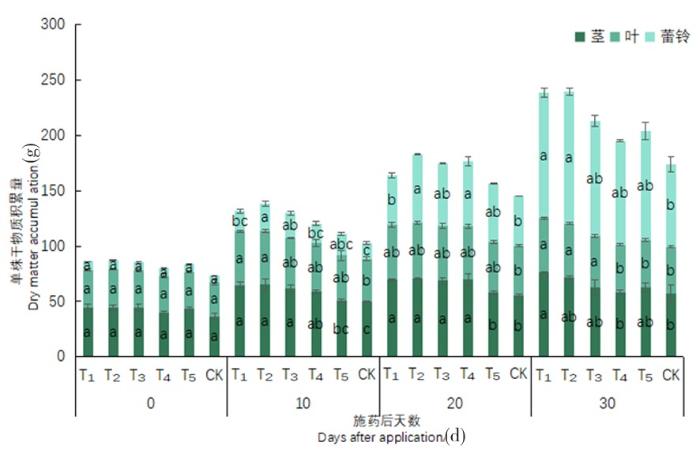
... 3.2 滴施生物药剂能够促进棉花株高、果枝数 和蕾铃数的增加从而增加干物质重量,与前人研究[37]一致.试验中抗病毒专用型助剂(T1)、复合微生物菌肥(T2)、 15%噁霉灵(T3)较对照株高增加了5~9 cm、果枝数增加1~3个、蕾数增加1~3个、铃数增加1~3个、主茎叶数增加3~4片.25%吡唑醚菌酯(T5)蕾数和铃数高于5%辛菌胺醋酸盐(T4),从而能够促使棉花营养生长向生殖生长转化,药剂的促生效果呈正相关.各处理籽棉产量均有不同程度的提高,增幅在3%~18%. ...
Effects of biological agent dripping on cotton Verticillium wilt and rhizosphere soil microorganism
1
2019
... 3.2 滴施生物药剂能够促进棉花株高、果枝数 和蕾铃数的增加从而增加干物质重量,与前人研究[37]一致.试验中抗病毒专用型助剂(T1)、复合微生物菌肥(T2)、 15%噁霉灵(T3)较对照株高增加了5~9 cm、果枝数增加1~3个、蕾数增加1~3个、铃数增加1~3个、主茎叶数增加3~4片.25%吡唑醚菌酯(T5)蕾数和铃数高于5%辛菌胺醋酸盐(T4),从而能够促使棉花营养生长向生殖生长转化,药剂的促生效果呈正相关.各处理籽棉产量均有不同程度的提高,增幅在3%~18%. ...